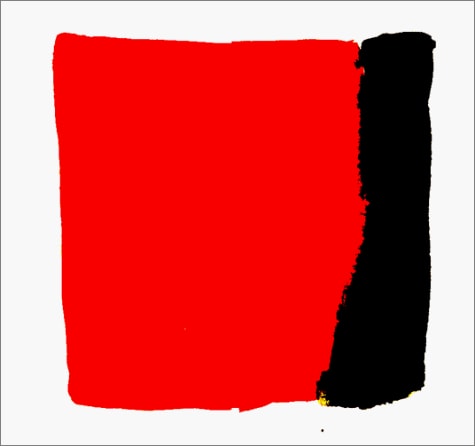
Ellsworth Kelly: The Early Drawings, 1948-1955
0
0
As an Amazon Associate and affiliate partner, Menrva Books earns from qualifying purchases. Learn more
Author Description
Despite that, casual encounters with Kelly’s work continue to reinforce my old suspicion that his work is often attractive but without depth, at best that of the proverbial petit maître. While I hardly expect any critic or historian to adjudicate my aesthetic judgments for me, I was hoping that Yve-Alain Bois’s most recent contribution to the literature on Kelly, another examination of his fruitful and multifaceted early years in France, would give me a clue. Unfortunately for me, in this case Bois has elected to write here as a historian only and not as a critic, which is to say, he mostly assumes that the aesthetic judgments have already been made—that the value of the work and the reason for it are already clear. Treating the drawings discussed and reproduced as “a series of windows opened onto the private sphere of the studio” (17), Bois’s essay is structured as biography, however substantial and detailed its attention to Kelly’s artistic thinking, which is seen as being primarily concerned, in this period, with a resistance to composition. He shows that there are “four major non-compositional strategies used by Kelly during his French years” (17)—which Bois dubs “transfer” (basically, indexical transcription), chance, grids, and the monochrome panel—and he shows how and why Kelly arrived at these strategies for avoiding composition with its concomitant sense of authorial intention or agency. What Bois does not do, unfortunately—and it is something one would think him supremely qualified to do—is to explicate what happens in the work when this evasion or dissimulation of agency is accomplished: when it is a dialogue no longer between maker and object, but between object and viewer. And he doesn’t approach the big question: Isn’t it precisely the evasion of overt agency that constitutes the great limitation of Kelly’s work, the point where self-restraint becomes self-defeating, marking a deficiency of rhetorical exuberance or emotional generosity?
Menrva's Summary
THE THESIS
This book examines the formative years of artist Ellsworth Kelly, focusing on his drawings created between 1948 and 1955 in France. The text delves into Kelly's artistic development during this crucial period, exploring his deliberate resistance to traditional composition. It highlights four key non-compositional strategies he employed: transfer, chance, grids, and monochrome panels, detailing how and why he adopted these methods to avoid overt authorial intention.
THE SCOPE MAP
- Analysis of Ellsworth Kelly's early drawings from 1948-1955.
- Exploration of Kelly's artistic thinking and his resistance to composition.
- Detailed examination of four non-compositional strategies: transfer, chance, grids, and monochrome panels.
- Biographical context of Kelly's years in France.
- Discussion of how Kelly's methods relate to authorial intention and agency.
- Reproductions of key drawings from the period.
THE AUTHORITY PERSPECTIVE
This book is presented as a scholarly examination of Ellsworth Kelly's early artistic development, focusing on his strategies for avoiding traditional composition in his drawings from 1948-1955. The text is structured around a historical and biographical approach, detailing Kelly's artistic thinking and the specific techniques he employed during his time in France. While it provides substantial insight into his methods, the reception suggests a critical perspective that questions whether the book fully explicates the viewer's experience of the work or addresses the potential limitations of Kelly's evasion of overt agency.
Page Count:
263
Publication Date:
1999-01-01
Publisher:
Harvard University Art Museums
ISBN-10:
1891771078
ISBN-13:
9781891771071
Art
Non-Fiction
Drawing
Modern Art
Art History
Community Tags
Similar Books






Reader Comments
Share Your Thoughts
No comments yet. Be the first to share your thoughts!