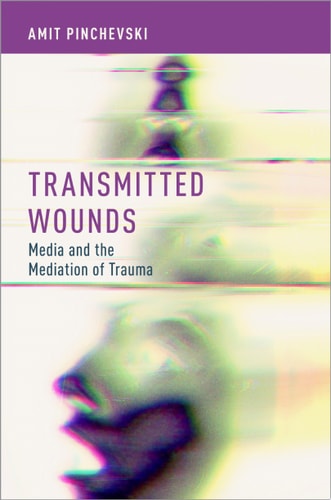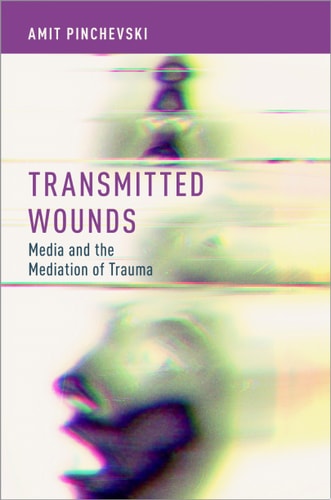
Transmitted Wounds: Media and the Mediation of Trauma
0
0
As an Amazon Associate and affiliate partner, Menrva Books earns from qualifying purchases. Learn more
Author Description
In Transmitted Wounds, Amit Pinchevski explores the ways media technology and logic shape the social life of trauma both clinically and culturally. Bringing media theory to bear on trauma theory, Pinchevski reveals the technical operations that inform the conception and experience of traumatic impact and memory. He offers a bold thesis about the deep association of media and trauma: media bear witness to the human failure to bear witness, making the traumatic technologically transmissible and reproducible.Taking up a number of case studies--the radio broadcasts of the Eichmann trial; the videotaping of Holocaust testimonies; recent psychiatric debates about trauma through media following the 9/11 attacks; current controversy surrounding drone operators' post-trauma; and digital platforms of algorithmic-holographic witnessing and virtual reality exposure therapy for PTSD--Pinchevski demonstrates how the technological mediation of trauma feeds into the traumatic condition itself. The result is a novel understanding of media as constituting the material conditions for trauma to appear as something that cannot be fully approached and yet somehow must be.While drawing on contemporary materialist media theory, especially the work of Friedrich Kittler and his followers, Pinchevski goes beyond the anti-humanistic tendency characterizing the materialist approach, discovering media as bearing out the human vulnerability epitomized in trauma, and finding therein a basis for moral concern in the face of violence and atrocity. Transmitted Wounds unfolds the ethical and political stakes involved in the technological transmission of mental wounds across clinical, literary, and cultural contexts.
Menrva's Summary
THE THESIS
How do media technologies and their underlying logic fundamentally shape the clinical and cultural manifestation of human trauma? Amit Pinchevski, a scholar of media and communication, synthesizes materialist media theory with trauma studies to argue that media act as a surrogate witness to human suffering. He posits that the technological mediation of trauma is not merely a record-keeping process but a constitutive force that makes trauma transmissible and reproducible in the modern era.
THE SCOPE MAP
What You Will Find
- Analysis of media theory through the lens of Friedrich Kittler and contemporary materialist frameworks.
- Case studies including the Eichmann trial broadcasts, Holocaust video testimonies, and 9/11 media coverage.
- Examination of modern technological interventions like drone warfare, algorithmic witnessing, and virtual reality PTSD therapy.
Scope Limits
- The text does not provide a clinical manual for treating PTSD or psychological disorders.
- It does not offer a comprehensive history of all media technologies, focusing instead on those specifically relevant to the mediation of traumatic events.
THE AUTHORITY PERSPECTIVE
Scholars in media studies and critical theory identify this work as a significant contribution to the intersection of technology and ethics. Readers frequently note the academic density of the prose, which requires a foundational understanding of media theory to fully grasp the author's arguments.
Page Count:
200
Publication Date:
2019-01-15
Publisher:
Oxford University Press
ISBN-10:
0190625589
ISBN-13:
9780190625580
Philosophy
Psychic Trauma
Media Studies
United States
Technology and Society
Communication Theory
Cultural Anthropology
Trauma Theory
Community Tags
Similar Books