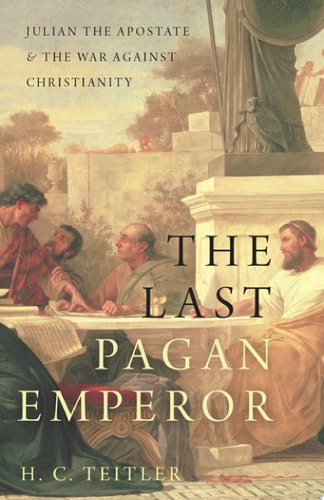
The Last Pagan Emperor
0
0
As an Amazon Associate and affiliate partner, Menrva Books earns from qualifying purchases. Learn more
Author Description
Flavius Claudius Julianus Was The Last Pagan To Sit On The Roman Imperial Throne (361-363). Born In Constantinople In 331 Or 332, Julian Was Raised As A Christian, But Apostatized, And During His Short Reign Tried To Revive Paganism, Which, After The Conversion To Christianity Of His Uncle Constantine The Great Early In The Fourth Century, Began Losing Ground At An Accelerating Pace. Having Become An Orphan When He Was Still Very Young, Julian Was Taken Care Of By His Cousin Constantius Ii, One Of Constantine's Sons, Who Permitted Him To Study Rhetoric And Philosophy And Even Made Him Co-emperor In 355. But The Relations Between Julian And Constantius Were Strained From The Beginning, And It Was Only Constantius' Sudden Death In 361 Which Prevented An Impending Civil War. As Sole Emperor, Julian Restored The Worship Of The Traditional Gods. He Opened Pagan Temples Again, Reintroduced Animal Sacrifices, And Propagated Paganism Through Both The Spoken And The Written Word. In His Treatise Against The Galilaeans He Sharply Criticised The Religion Of The Followers Of Jesus Whom He Disparagingly Called 'galilaeans'. He Put His Words Into Action, And Issued Laws Which Were Displeasing To Christians--the Most Notorious Being His School Edict. This Provoked The Anger Of The Christians, Who Reacted Fiercely, And Accused Julian Of Being A Persecutor Like His Predecessors Nero, Decius, And Diocletian. Violent Conflicts Between Pagans And Christians Made Themselves Felt All Over The Empire. It Is Disputed Whether Or Not Julian Himself Was Behind Such Outbursts. Accusations Against The Apostate Continued To Be Uttered Even After The Emperor's Early Death. In This Book, The Feasibility Of Such Charges Is Examined.
Menrva's Summary
THE THESIS
This work investigates the historical validity of the accusations that Emperor Julian the Apostate actively orchestrated the persecution of Christians during his brief reign. H. C. Teitler, a scholar of late antiquity, utilizes primary source documents and historical records to evaluate the political and religious climate of the fourth-century Roman Empire. The author examines the tension between Julian’s attempts to restore traditional paganism and the rising influence of Christianity, specifically analyzing the impact of his legislative actions and the subsequent reactions from contemporary Christian writers.
THE SCOPE MAP
What You Will Find
- Analysis of Julian’s reign from 361 to 363 AD
- Examination of the School Edict and its social implications
- Review of the treatise Against the Galilaeans
- Assessment of the relationship between Julian and Constantius II
Scope Limits
- Does not provide a comprehensive biography of Julian’s entire life
- Does not focus on military campaigns outside the context of religious policy
THE AUTHORITY PERSPECTIVE
Scholars and historians recognize this text as a rigorous examination of the historiography surrounding Julian’s religious policies. Readers frequently note the academic density of the prose and the author's meticulous approach to evaluating biased ancient sources.
Page Count:
224
Publication Date:
2017-01-01
Publisher:
Oxford University Press
ISBN-10:
0190626518
ISBN-13:
9780190626518
History
Biography
Religion
Ancient - Rome
Community Tags
Similar Books