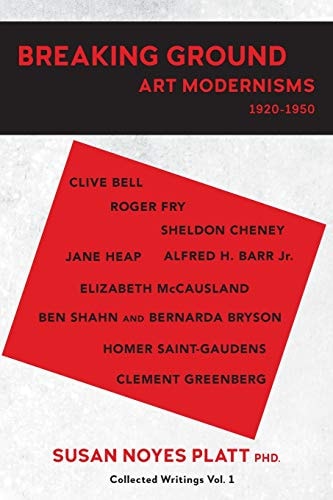
Breaking Ground: Art Modernisms 1920-1950
0
0
As an Amazon Associate and affiliate partner, Menrva Books earns from qualifying purchases. Learn more
Author Description
Breaking Ground: Art Modernisms 1920-1950 reveals exciting new perspectives on the history of modernist art criticism in the United States. The first essays examine critics who embraced formalism in the 1920s under the impact of the English theorists Roger Fry and Clive Bell. Next is the brilliant Jane Heap's eccentric wedding of mysticism and modernism. At the same time Elizabeth McCausland articulated the principles of the widely accepted concept of socially engaged art during the Depression years. Ben and Bernarda Shahn demonstrate the flexibility of the principle of social engagement, as do the expansive perspectives of Homer Saint-Gaudens during thirty years as the curator of the Carnegie International exhibition. In these same years, under the pressure of the rise of Fascism, Alfred Barr at the Museum of Modern Art stripped away this inclusive and radical vision. His invention of a myth of modern art evolving toward abstraction became the dominant critical concept of the mid twentieth century through the opportunistic rise of Clement Greenberg during World War II. Breaking Ground: Art Modernisms 1920-1950 overturns the long-codified history of modernist criticism by demonstrating its roots, expansion, and transformations as well as its final ossification.
Menrva's Summary
THE THESIS
This book re-examines the history of modernist art criticism in the United States from 1920 to 1950. It explores the evolution of critical thought, beginning with formalism influenced by English theorists, moving through the socially engaged art movements of the Depression era, and culminating in the shift towards abstraction championed by figures like Alfred Barr and Clement Greenberg. The work challenges the established narrative by tracing the roots, expansion, transformations, and eventual ossification of modernist critical perspectives.
THE SCOPE MAP
- Analysis of critics embracing formalism in the 1920s, influenced by Roger Fry and Clive Bell.
- Exploration of Jane Heap's unique blend of mysticism and modernism.
- Examination of Elizabeth McCausland's articulation of socially engaged art principles during the Depression.
- Discussion of Ben and Bernarda Shahn's demonstration of social engagement flexibility.
- Overview of Homer Saint-Gaudens' expansive perspectives as curator of the Carnegie International.
- Critique of Alfred Barr's role at MoMA in shaping a narrative of art evolving towards abstraction.
- Analysis of Clement Greenberg's rise and the dominance of abstraction as a critical concept.
THE AUTHORITY PERSPECTIVE
The book offers a revisionist perspective on the established history of modernist art criticism in America. It highlights lesser-known figures and reinterprets the contributions of prominent critics, challenging long-held assumptions about the trajectory of art movements and critical thought. The work aims to demonstrate the complexity and transformation of modernist criticism, from its radical roots to its eventual consolidation. By focusing on specific critics and their evolving ideas, the book provides a detailed account of a pivotal period in art history.
Page Count:
212
Publication Date:
2020-01-01
Publisher:
Susan Noyes Platt
ISBN-10:
1734504307
ISBN-13:
9781734504309
Art
Non-Fiction
Art History
Modern Art
American Art
Art Criticism
Community Tags
Similar Books