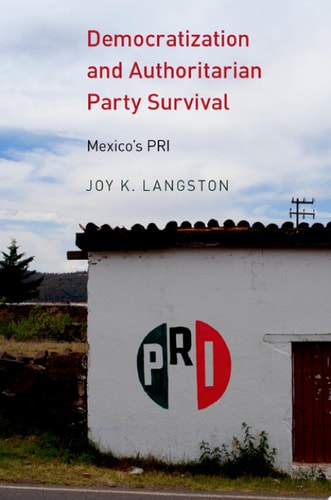
Democratization and Authoritarian Party Survival: Mexico's PRI
0
0
As an Amazon Associate and affiliate partner, Menrva Books earns from qualifying purchases. Learn more
Author Description
When Mexico's authoritarian Party of the Institutional Revolution (PRI) was defeated in the 2000 presidential election after seventy-one years of uninterrupted rule, many analysts believed the party would inevitably splinter and collapse. An authoritarian party without control over government resources and without a strong national executive creates both opportunity and incentive for ambitious politicians to leave the party and join a separate faction. To the surprise of many, however, the PRI managed to deviate from this pattern, and returned triumphantly to the presidency in 2012.Democratization and Authoritarian Party Survival: Mexico's PRI argues that those authoritarian parties that survive the transition to democratic elections do so because they are able to adjust to electoral challenges and the rigors of the ballot box more quickly and effectively than their internal party rivals. Such as in the case of the PRI, these electorally-oriented vote winners find ways to cooperate and avoid the dangers of internal ruptures. Those authoritarian parties in which vote-winning factions are unable to defeat their intra-party rivals, or those that divide and fragment, are less likely to survive the transition to democratic voting. Despite the interest in Mexico's former hegemonic party and its return to power, no full-length monograph has been dedicated to studying its transformation. This book takes a long lens view of authoritarian party survival and zeros in on the transformation of Mexico's PRI, making a substantive and novel contribution to the wider literature on party organizational change, authoritarian party survival, and democratization.
Menrva's Summary
THE THESIS
This book investigates the mechanisms that allowed Mexico's Institutional Revolutionary Party (PRI) to survive the transition to democracy and regain power after losing the presidency in 2000. Joy K. Langston, a political scientist specializing in Mexican politics, utilizes historical data and party organizational analysis to challenge the assumption that authoritarian parties inevitably collapse when they lose state resources. She argues that the PRI's survival was contingent upon the ability of electorally-oriented factions to consolidate power and suppress internal fragmentation during the transition period.
THE SCOPE MAP
What You Will Find
- Analysis of the PRI's organizational transformation from 2000 to 2012
- A comparative framework for understanding authoritarian party survival in democratic transitions
- Examination of internal party dynamics and factional competition
Scope Limits
- The study focuses primarily on the PRI and does not provide a comprehensive comparative analysis of all global authoritarian party transitions
- The text does not cover post-2012 political developments in Mexico
THE AUTHORITY PERSPECTIVE
Scholars of Latin American politics recognize this work as a significant contribution to the study of party organizational change and authoritarian resilience. Readers frequently note the academic rigor of the text, which provides a detailed look at the internal mechanics of one of the world's most enduring political organizations.
Page Count:
256
Publication Date:
2017-01-01
Publisher:
Oxford University Press
ISBN-10:
0190628545
ISBN-13:
9780190628543
History
American Studies
Politics & Government
Mexico
Community Tags
Other Editions(3)
Similar Books










Reader Comments
Share Your Thoughts
No comments yet. Be the first to share your thoughts!