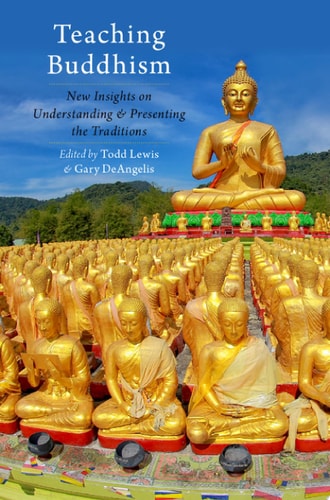
Teaching Buddhism: New Insights on Understanding and Presenting the Traditions
0
0
As an Amazon Associate and affiliate partner, Menrva Books earns from qualifying purchases. Learn more
Author Description
Buddhist studies is a rapidly changing field of research, constantly transforming and adapting to new scholarship. This creates a problem for instructors, both in a university setting and in monastic schools, as they try to develop a curriculum based on a body of scholarship that continually shifts in focus and expands to new areas.Teaching Buddhism establishes a dialogue between the community of instructors of Buddhism and leading scholars in the field who are updating, revising, and correcting earlier understandings of Buddhist traditions. Each chapter presents new ideas within a particular theme of Buddhist studies and explores how courses can be enhanced with these insights. Contributors in the first section focus on the typical approaches, figures, and traditions in undergraduate courses, such as the role of philosophy in Buddhism, Nagarjuna, Yogacara Buddhism, tantric traditions, and Zen Buddhism. They describe the impact of recent developments-like new studies in the cognitive sciences-on scholarship in those areas. Part Two examines how political engagement and ritual practice have shaped the tradition throughout its history. Focus then shifts to the issues facing instructors of Buddhism-dilemmas for the scholar-practitioner in the academic and monastic classroom, the tradition's possible roles in teaching feminism and diversity, and how to present the tradition in the context of a world religions course. In the final section, contributors offer stories of their own experiences teaching, paying particular attention to the ways in which American culture has impacted them. They discuss the development of courses on American Buddhism; using course material on the family and children; the history and trajectory of a Buddhist-Christian dialog; and Buddhist bioethics, environmentalism, economic development, and social justice. In synthesizing this vast and varied body of research, the contributors in this volume have provided an invaluable service to the field
Menrva's Summary
THE THESIS
This volume investigates how instructors can effectively integrate rapidly evolving scholarship into their curricula for teaching Buddhist traditions. Editors Gary Delaney DeAngelis and Todd Lewis curate a collection of essays from leading scholars to bridge the gap between academic research and classroom practice. The text addresses the challenge of maintaining current, accurate course material in a field characterized by constant transformation and new interdisciplinary insights.
THE SCOPE MAP
What You Will Find
- Analysis of core Buddhist traditions including Zen, Yogacara, and Tantric practices
- Integration of cognitive science into traditional Buddhist studies
- Pedagogical strategies for addressing feminism, diversity, and social justice
- Case studies on teaching American Buddhism and Buddhist-Christian dialogue
Scope Limits
- The text focuses primarily on university and monastic classroom settings
- It does not provide a comprehensive historical survey of Buddhism itself
THE AUTHORITY PERSPECTIVE
Experts within the American Academy of Religion recognize this work as a practical resource for educators navigating the complexities of modern religious studies. Readers frequently note the utility of the contributors' personal teaching experiences in addressing contemporary ethical and social issues within the classroom.
Page Count:
432
Publication Date:
2016-01-01
Publisher:
Oxford University Press
ISBN-10:
0190629150
ISBN-13:
9780190629151
Religion
Academic
Pedagogy
Buddhism
Education
Community Tags
Similar Books




Reader Comments
Share Your Thoughts
No comments yet. Be the first to share your thoughts!