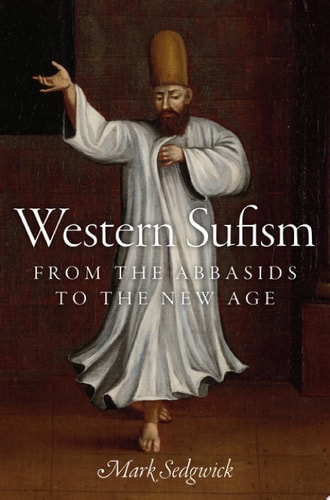
Western Sufism From the Abbasids to the New Age
0
0
As an Amazon Associate and affiliate partner, Menrva Books earns from qualifying purchases. Learn more
Author Description
Neoplatonism and emanationism -- Plotinus, the key -- Emanation explained -- Neoplatonism spreads -- Arab neoplatonism to Ibn Arabi -- Arab neoplatonism -- The first sufis -- Sufi classics -- Jewish and Christian Neoplatonism to Meister Eckhart -- Jewish neoplatonism -- Jewish sufism -- Latin neoplatonism -- Dervishes, 1480-1899 -- Dervishes as angels, deviants, and mystics -- Dervishes, angels and demons -- The view from france -- Sufism as mystical theology -- Deism and pantheism -- The prisca theologia in the Renaissance -- Universalism: Guillaume Postel and the inquisition -- Deism demonstrated by Arab and Turk -- Pantheism and anti-exotericism -- Universalist sufism -- Sufism as esoteric pantheism -- Perennialism and universalism in India -- The Dabistan and after -- Dervishes as Epicurean and fanatical -- Dervishes in drama, painting and verse -- The Rubáiyát of Omar Khayyám -- Fighting dervishes -- The establishment of sufism in the west, 1910-33 -- Transcendentalism, theosophy and sufism -- Transcendentalism and the Missouri platonists -- The theosophical society and Carl-Henrik Bjerregaard -- Ivan Aguéli, the western sufi -- Towards the one: Inayat Khan and the sufi movement -- Inayat Khan visits America -- The sufi message is spread -- The continuation of the sufi movement -- Tradition and consciousness -- René Guénon and the traditionalists -- Georges Gurdjieff and consciousness -- The early years of John G. Bennett -- The development of sufism in the west, 1950-68 -- Polarization -- Towards Islam -- Reorientation with Meher Baba -- The travels of John G. Bennett -- The Maryamiyya and the Oglala Sioux - Idries Shah and sufi psychology -- Shah and the Gurdjieff tradition -- Shah's sufism -- Followers and opponents -- Sufism in the new age -- Traditionalism and the new age -- The sufi movement conserved -- Sufi Sam in San Francisco -- Vilayat and the sufi order international -- Islamic sufism -- Ian Dallas and the Darqawiyya -- Ibn Arabi and Beshara
Menrva's Summary
THE THESIS
This work investigates the historical transmission and transformation of Sufi thought as it moved from the Islamic world into Western intellectual and spiritual contexts. Mark J. Sedgwick, a scholar of Western esotericism and political science, utilizes a historical-analytical framework to trace how Neoplatonic roots and Islamic mystical traditions were reinterpreted by Western thinkers. He argues that the Western reception of Sufism is not a monolithic phenomenon but a complex synthesis of perennialism, universalism, and evolving cultural perceptions of the 'Dervish' figure.
THE SCOPE MAP
What You Will Find
- Historical analysis of Neoplatonism from Plotinus to Ibn Arabi.
- Examination of the influence of Sufism on Western figures such as Meister Eckhart, Guillaume Postel, and Inayat Khan.
- Documentation of the institutionalization of Sufi movements in the West during the 20th century.
- Exploration of the intersection between Sufism, Theosophy, and the New Age movement.
Scope Limits
- The text does not provide a comprehensive theological manual for practicing Sufism.
- It does not focus on the internal development of Sufi orders within the Middle East after the 20th century.
THE AUTHORITY PERSPECTIVE
Scholars and historians of religion recognize this text as a rigorous, academic survey of the intellectual history of Western Sufism. Readers frequently note the dense, encyclopedic nature of the research, which serves as a foundational reference for understanding the cross-cultural exchange of esoteric ideas.
Page Count:
350
Publication Date:
2016-01-01
Publisher:
Oxford University Press
ISBN-10:
0190622709
ISBN-13:
9780190622701
Philosophy
Religion
History
Esotericism
Sufism
Community Tags
Similar Books