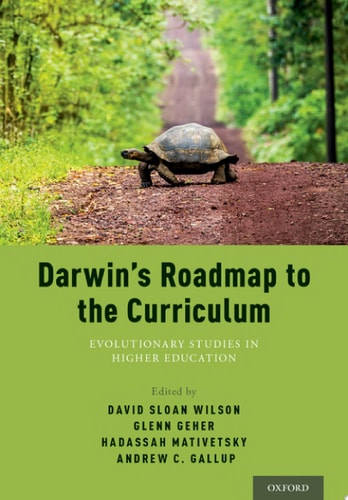
Darwin's Roadmap to the Curriculum: Evolutionary Studies in Higher Education
0
0
As an Amazon Associate and affiliate partner, Menrva Books earns from qualifying purchases. Learn more
Author Description
There is a paradox when it comes to Darwinian ideas within the academy. On one hand, Darwin's theories have famously changed the foundational ideas related to the origins of life, shaping entire disciplines in the biological sciences. On the other hand, people in educated societies across the globe today are famously misinformed and uneducated about Darwinian principles and ideas. Applications of evolutionary theory outside the traditional areas of biology have been slow to progress, and scholars doing such work regularly run into all kinds of political backlash. However, a slow but steady push to advance the teaching of evolution across academic disciplines has been under way for more than a decade.This book serves to integrate the vast literature in the interdisciplinary field of Evolutionary Studies (EvoS), providing clear examples of how evolutionary concepts relate to all facets of life. Further, this book provides chapters dedicated to the processes associated with an EvoS education, including examples of how an interdisciplinary approach to evolutionary theory has been implemented successfully at various colleges, universities, and degree programs. This book also offers chapters outlining a variety of applications to an evolution education, including improved sustainable development, medical practices, and creative and critical thinking skills. Exploring controversies surrounding evolution education, this volume provides a roadmap to asking and answering Darwinian questions across all areas of intellectual inquiry.
Menrva's Summary
THE THESIS
This volume investigates the paradox of Darwinian theory's foundational status in biology versus its limited integration across the broader academic curriculum. The authors, a team of scholars led by Andrew Gallup, David Sloan Wilson, and Glenn Geher, argue that evolutionary studies (EvoS) provide a necessary interdisciplinary framework for modern intellectual inquiry. They synthesize existing literature and institutional case studies to propose a roadmap for overcoming political and structural barriers to teaching evolution outside the biological sciences.
THE SCOPE MAP
What You Will Find
- Case studies of successful interdisciplinary EvoS programs at various universities
- Frameworks for applying evolutionary theory to medicine, sustainability, and critical thinking
- Analysis of the political and cultural controversies surrounding evolution education
- Strategies for curriculum development across diverse academic departments
Scope Limits
- Does not provide an exhaustive history of evolutionary biology itself
- Does not focus on primary biological research but rather on pedagogical implementation
THE AUTHORITY PERSPECTIVE
Experts identify this work as a primary resource for faculty and administrators seeking to implement interdisciplinary evolutionary studies programs. Readers frequently note the practical utility of the provided case studies for navigating institutional resistance to curriculum change.
Page Count:
512
Publication Date:
2019-05-29
Publisher:
Oxford University Press
ISBN-10:
0190624965
ISBN-13:
9780190624965
Education
Science Policy
Higher Education
Academic Theory
Interdisciplinary Studies
Evolutionary Biology
Community Tags
Similar Books