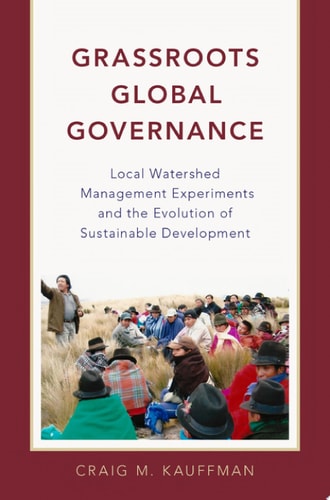
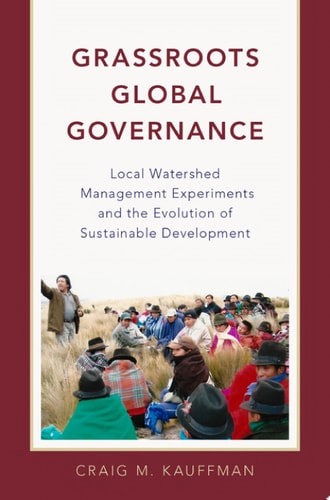
Grassroots Global Governance
0
0
As an Amazon Associate and affiliate partner, Menrva Books earns from qualifying purchases. Learn more
Author Description
When International Agreements Fail To Solve Global Problems Like Climate Change, Transnational Networks Attempt To Address Them By Implementing Global Ideas -- Policies And Best Practices Negotiated At The Global Level-locally Around The World. Grassroots Global Governance Not Only Explains Why Some Efforts Succeed And Others Fail, But Also Why The Process Of Implementing Global Ideas Locally Causes These Ideas To Evolve. Drawing On Nodal Governance Theory, The Book Shows How Transnational Actors' Success In Putting Global Ideas Into Practice Depends On The Framing And Network Capacity-building Strategies They Use To Activate Networks Of Grassroots Actors Influential In Local Social And Policy Arenas. Grassroots Actors Neither Accept Nor Reject Global Ideas As Presented By Outsiders. Instead, They Negotiate Whether And How To Adapt Them To Fit Local Conditions. This Contestation Produces Experimentation, And Results In Unique Institutional Applications Of Global Ideas Infused With Local Norms And Practices. Grassroots Actors Ultimately Guide This Process Due To Their Unique Ability To Provide The Pressure Needed To Push The Process Forward. Experiments That Endure Are Perceived As Successful, Empowering Those Actors Involved To Activate Transnational Networks To Scale Up And Diffuse Innovative Local Governance Models Globally. These Models Carry Local Norms And Practices To The International Level Where They Challenge Existing Global Approaches And Stimulate New Global Governance Institutions. By Guiding The Way Global Ideas Evolve Through Local Experimentation, Grassroots Actors Reshape International Actors' Thinking, Discourse, Organizing, And The Strategies They Pursue Globally. This Makes Them Grassroots Global Governors. To Demonstrate This, The Book Compares Transnational Efforts To Implement Local Integrated Watershed Management Programs Across Ecuador And Shows How Local Experiments Altered The Global Debate Regarding Sustainable Development And Stimulated A
Menrva's Summary
THE THESIS
This book investigates how transnational networks implement global policy ideas at the local level and the mechanisms that determine the success or failure of these initiatives. Craig M. Kauffman, an expert in environmental politics and international relations, utilizes nodal governance theory to analyze the interaction between global actors and grassroots organizations. He argues that global ideas are not merely adopted but are actively negotiated and transformed by local actors, creating a feedback loop that influences international policy discourse.
THE SCOPE MAP
What You Will Find
- Nodal governance theory as a framework for analyzing transnational policy implementation.
- Comparative analysis of integrated watershed management programs in Ecuador.
- Strategies for framing and network capacity-building in local social and policy arenas.
- Evidence of how local institutional experimentation informs and challenges global governance models.
Scope Limits
- The study focuses primarily on environmental governance and watershed management rather than broader economic or security-based international agreements.
- The analysis is geographically centered on Ecuador, though the theoretical implications are intended for global application.
THE AUTHORITY PERSPECTIVE
Scholars in the field of international relations identify this work as a significant contribution to understanding the bottom-up dynamics of global governance. Readers frequently note the academic density of the prose, which is well-suited for researchers and graduate-level students interested in policy diffusion and environmental politics.
Page Count:
288
Publication Date:
2016-01-01
Publisher:
Oxford University Press
ISBN-10:
0190625740
ISBN-13:
9780190625740
Governance
Globalization
Sociology
International relations
Community Tags
Other Editions(2)
Similar Books




Reader Comments
Share Your Thoughts
No comments yet. Be the first to share your thoughts!