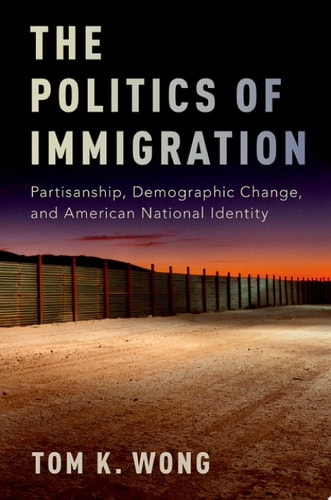
The Politics of Immigration: Partisanship, Demographic Change, and American National Identity
0
0
As an Amazon Associate and affiliate partner, Menrva Books earns from qualifying purchases. Learn more
Author Description
Immigration has been deeply woven into the fabric of American nation building since the founding of the Republic. Indeed, immigrants have played an integral role in American history, but they are also intricately tied to America's present and will feature prominently in America's future. Immigration can shape a nation. Consequently, immigration policy can maintain, replenish, and even reshape it. Immigration policy debates are thus seldom just about who to let in and how many, as a nation's immigration policies can define its identity. This is what helps breathe fire into the politics of immigration. Against this backdrop, political parties promote their own narratives about what the immigration policies of a nation of immigrants should be while undermining the contrasting narratives of political opponents. Racial and ethnic groups mobilize for political inclusion as immigration increases their numbers, but are often confronted by the counteractive mobilization of nativist groups. Legislators calibrate their positions on immigration by weighing traditional electoral concerns against a new demographic normal that is reshaping the American electorate. At stake are not just what our immigration policies will be, but also what America can become. What are the determinants of immigration policymaking in the United States? The Politics of Immigration focuses the analytical lens on the electoral incentives that legislators in Congress have to support or oppose immigration policy reforms at the federal level. In contrast to previous arguments, Tom K. Wong argues that contemporary immigration politics in the United States can be characterized by three underlying features: the entrenchment of partisan divides among legislators on the issue of immigration, the political implications of the demographic changes that are reshaping the American electorate, and how these changes are creating new opportunities to define what it means to be an American in a period of unprecedented na
Menrva's Summary
THE THESIS
What are the primary electoral incentives that drive federal legislators to support or oppose immigration policy reforms in the United States? Tom K. Wong, an associate professor of political science, examines the intersection of partisan polarization and shifting demographics in American politics. He argues that immigration policy is not merely a functional debate over numbers, but a fundamental contest over national identity, where legislators balance traditional electoral pressures against a rapidly changing electorate.
THE SCOPE MAP
What You Will Find
- Analysis of partisan divide entrenchment within the U.S. Congress.
- Examination of how demographic shifts influence electoral strategies.
- Theoretical framework linking immigration policy to the definition of American national identity.
Scope Limits
- The text focuses primarily on federal legislative incentives rather than local or state-level immigration enforcement.
- It does not provide a comprehensive history of immigration law prior to the modern era of intense partisan polarization.
THE AUTHORITY PERSPECTIVE
Experts recognize this work as a significant contribution to the study of legislative behavior and the political economy of immigration. Readers frequently note the academic density of the prose, which is well-suited for students and researchers of American political institutions.
Page Count:
301
Publication Date:
2016-01-01
Publisher:
Oxford University Press
ISBN-10:
0190628324
ISBN-13:
9780190628321
Immigration Policy
United States
American Government
Sociology
Public Policy
Community Tags
Similar Books