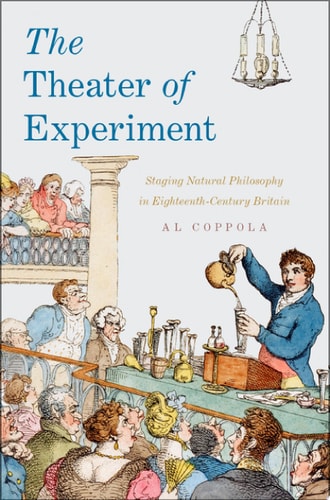
The Theater of Experiment: Staging Natural Philosophy in Eighteenth-Century Britain
0
0
As an Amazon Associate and affiliate partner, Menrva Books earns from qualifying purchases. Learn more
Author Description
The first book-length study of the relationship between science and theater during the long eighteenth century in Britain, The Theater of Experiment explores the crucial role of spectacle in the establishment of modern science by analyzing how eighteenth-century science was "staged" in a double sense. On the one hand, this study analyzes science in performance: the way that science and scientists were made a public spectacle in comedies, farces, and pantomimes for purposes that could range from the satiric to the pedagogic to the hagiographic. But this book also considers the way in which these plays laid bare science as performance: that is, the way that eighteenth-century science was itself a kind of performing art, subject to regimes of stagecraft that traversed the laboratory, the lecture hall, the anatomy theater, and the public stage. Not only did the representation of natural philosophy in eighteenth-century plays like Thomas Shadwell's Virtuoso, Aphra Behn's The Emperor of the Moon, Susanna Centlivre's The Basset Table, and John Rich's Necromancer, or Harelequin Doctor Faustus, influence contemporary debates over the role that experimental science was to play public life, the theater shaped the very form that science itself was to take. By disciplining, and ultimately helping to legitimate, experimental philosophy, the eighteenth-century stage helped to naturalize an epistemology based on self-evident, decontextualized facts that might speak for themselves. In this, the stage and the lab jointly fostered an Enlightenment culture of spectacle that transformed the conditions necessary for the production and dissemination of scientific knowledge. Precisely because Enlightenment public science initiatives, taking their cue from the public stages, came to embrace the stagecraft and spectacle that Restoration natural philosophy sought to repress from the scene of experimental knowledge production, eighteenth-century science organized itself around not the sober, m
Menrva's Summary
THE THESIS
This book investigates how the intersection of eighteenth-century British theater and natural philosophy shaped the public perception and methodological development of modern science. Al Coppola, an associate professor of English, examines the reciprocal relationship between scientific practice and theatrical performance during the Enlightenment. He argues that science was not merely communicated through theater but was fundamentally structured by the same regimes of spectacle and stagecraft that defined the period's dramatic arts.
THE SCOPE MAP
What You Will Find
- Analysis of plays by Thomas Shadwell, Aphra Behn, Susanna Centlivre, and John Rich.
- Examination of the parallels between laboratory experiments and stage performances.
- Historical context regarding the public dissemination of scientific knowledge in Britain.
Scope Limits
- The study focuses primarily on the British context and does not provide a comprehensive survey of continental European scientific theater.
- The analysis is restricted to the long eighteenth century and does not extend into nineteenth-century industrial scientific practices.
THE AUTHORITY PERSPECTIVE
Scholars in the history of science and literature frequently cite this work for its focus on the performative nature of Enlightenment epistemology. Experts highlight the text as a significant contribution to understanding how early modern scientific legitimacy was constructed through public spectacle.
Page Count:
277
Publication Date:
2016-01-01
Publisher:
Oxford University Press
ISBN-10:
0190627263
ISBN-13:
9780190627263
History
Criticism history
European History
Theater History
British literature
Philosophy of
English
English & College Success
Science History
Eighteenth Century
Great Britain
Community Tags
Similar Books