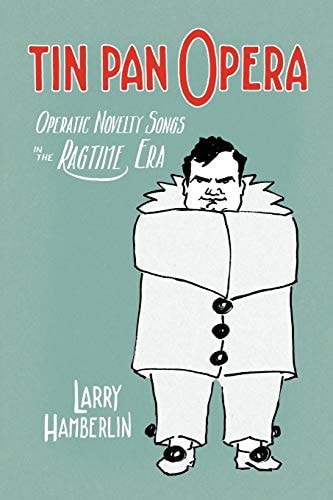
Tin Pan Opera: Operatic Novelties in the Ragtime Era
0
0
As an Amazon Associate and affiliate partner, Menrva Books earns from qualifying purchases. Learn more
Author Description
Though the distance between opera and popular music seems immense today, a century ago opera was an integral part of American popular music culture, and familiarity with opera was still a part of American "cultural literacy." During the Ragtime era, hundreds of humorous Tin Pan Alley songs centered on operatic subjects-either directly quoting operas or alluding to operatic characters and vocal stars of the time. These songs brilliantly captured the moment when popular music in America transitioned away from its European operatic heritage, and when the distinction between low- and high-brow "popular" musical forms was free to develop, with all its attendant cultural snobbery and rebellion.Author Larry Hamberlin guides us through this large but oft-forgotten repertoire of operatic novelties, and brings to life the rich humor and keen social criticism of the era. In the early twentieth-century, when new social forces were undermining the view that our European heritage was intrinsically superior to our native vernacular culture, opera-that great inheritance from our European forebearers-functioned in popular discourse as a signifier for elite culture. Tin Pan Opera shows that these operatic novelty songs availed this connection to a humorous and critical end. Combining traditional, European operatic melodies with the new and American rhythmic verve of ragtime, these songs painted vivid images of immigrant Americans, liberated women, and upwardly striving African Americans, striking emblems of the profound transformations that shook the United States at the beginning of the American century.
Menrva's Summary
THE THESIS
This book investigates how operatic novelty songs in the early twentieth century served as a critical bridge between European high-brow traditions and the emerging American vernacular music scene. Larry Hamberlin, a scholar of American music, utilizes a vast collection of Tin Pan Alley compositions to argue that these songs were not merely humorous parodies, but complex social commentaries. By analyzing the intersection of ragtime rhythms and operatic motifs, the author demonstrates how these works reflected the shifting cultural identity of the United States during a period of rapid social change.
THE SCOPE MAP
What You Will Find
- Analysis of hundreds of Tin Pan Alley songs referencing operatic themes and stars
- Examination of the cultural tension between European heritage and American popular music
- Historical context regarding immigrant experiences, gender roles, and racial dynamics of the era
Scope Limits
- The text does not provide a comprehensive history of opera itself, focusing instead on its reception in popular song
- It does not cover post-Ragtime musical developments in depth
THE AUTHORITY PERSPECTIVE
Scholars and music historians recognize this work as a significant contribution to the study of American popular music and cultural stratification. Readers frequently note the academic rigor of the research and the author's ability to contextualize forgotten musical novelties within broader societal transformations.
Page Count:
352
Publication Date:
2016-10-01
Publisher:
Oxford University Press
ISBN-10:
0190632194
ISBN-13:
9780190632199
Ragtime
American Studies
Cultural History
Tin Pan Alley
Music History
Opera
Popular music
Community Tags
Similar Books