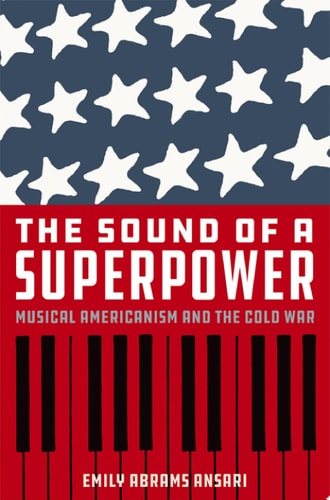
The Sound of a Superpower: Musical Americanism and the Cold War
0
0
As an Amazon Associate and affiliate partner, Menrva Books earns from qualifying purchases. Learn more
Author Description
Classical Composers Seeking To Create An American Sound Enjoyed Unprecedented Success During The 1930s And 1940s. Aaron Copland, Roy Harris, Howard Hanson, And Others Brought National And International Attention To American Composers For The First Time In History. In The Years After World War Ii, However, Something Changed. The Prestige Of Musical Americanism Waned Rapidly As Anti-communists Made Accusations Against Leading Americanist Composers. Meanwhile, A Method Of Harmonic Organization That Some Considered More Cold War, Appropriate, Serialism, Began To Rise In Status. For Many Composers And Historians, The Cold War Had Effectively 'killed Off' Musical Americanism. In This Work, The Author Offers A Fuller, More Nuanced Picture Of The Effect Of The Cold War On Americanist Composers. Emily Abrams Ansari. Previously Issued In Print: 2018. Includes Bibliographical References And Index.
Menrva's Summary
THE THESIS
This book investigates the decline of musical Americanism in the post-World War II era and the extent to which Cold War political pressures influenced the shift toward serialism. Emily Abrams Ansari, a musicologist, utilizes archival research and historical analysis to challenge the common narrative that the Cold War abruptly ended the popularity of Americanist composers. She argues that the transition was more complex and nuanced than a simple ideological suppression, examining how composers navigated the changing political landscape of the mid-twentieth century.
THE SCOPE MAP
What You Will Find
- Analysis of the rise and fall of Americanist musical styles during the 1930s and 1940s.
- Examination of the impact of anti-communist accusations on prominent composers like Aaron Copland and Roy Harris.
- Comparison between the aesthetic values of Americanism and the rising status of serialism.
Scope Limits
- The text does not provide a comprehensive biography of every Americanist composer of the period.
- It does not focus on popular music or jazz, concentrating primarily on the classical and academic music spheres.
THE AUTHORITY PERSPECTIVE
Scholars and music historians recognize this work as a significant contribution to the study of mid-century American cultural politics. Readers frequently note the academic rigor and the depth of the primary source research presented throughout the text.
Page Count:
0
Publication Date:
1900-01-01
Publisher:
Oxford University Press,
ISBN-10:
0190649720
ISBN-13:
9780190649722
Music
Cultural History
American Studies
Music History
Cold War
Community Tags
Similar Books