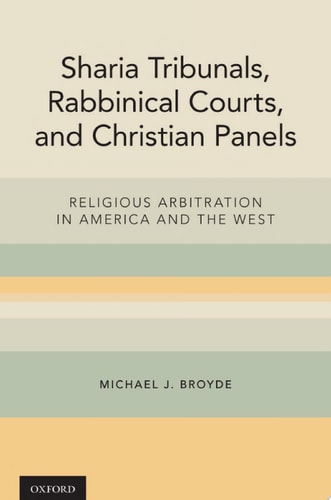
Sharia Tribunals, Rabbinical Courts, And Christian Panels
0
0
As an Amazon Associate and affiliate partner, Menrva Books earns from qualifying purchases. Learn more
Author Description
This Book Explores The Rise Of Private Arbitration In Religious And Other Values-oriented Communities, And It Argues That Secular Societies Should Use Secular Legal Frameworks To Facilitate, Enforce, And Also Regulate Religious Arbitration. It Covers The History Of Religious Arbitration; The Kinds Of Faith-based Dispute Resolution Models Currently In Use; How The Law Should Perceive Them; And What The Role Of Religious Arbitration In The United States And The Western World Should Be. Part One Examines Why Religious Individuals And Communities Are Increasingly Turning To Private Faith-based Dispute Resolution To Arbitrate Their Litigious Disputes. It Focuses On Why Religious Communities Feel Disenfranchised From Secular Law, And Particularly Secular Family Law. Part Two Looks At Why American Law Is So Comfortable With Faith-based Arbitration, Given Its Penchant For Enabling Parties To Order Their Relationships And Resolve Their Disputes Using Norms And Values That Are Often Different From And Sometimes Opposed To Secular Standards. Part Three Weighs The Proper Procedural, Jurisdictional, And Contractual Limits Of Arbitration Generally, And Of Religious Arbitration Particularly. It Identifies And Explains The Reasonable Limitations On Religious Arbitration. Part Four Examines Whether Secular Societies Should Facilitate Effective, Legally Enforceable Religious Dispute Resolution, And It Argues That Religious Arbitration Is Not Only Good For The Religious Community Itself, But That Having Many Different Avenues For Faith-based Arbitration Which Are Properly Limited Is Good For Any Vibrant Pluralistic Democracy Inhabited By Diverse Faith Groups.
Menrva's Summary
THE THESIS
This book investigates the intersection of religious dispute resolution and secular legal systems, arguing that democratic societies should establish frameworks to facilitate and regulate private faith-based arbitration. Michael J. Broyde, a professor of law and expert in religious legal systems, utilizes historical analysis and legal theory to propose that integrating religious tribunals into the broader legal landscape supports a healthy, pluralistic democracy. The work examines the motivations behind the rise of private arbitration and provides a normative framework for how secular courts should interact with these religious bodies.
THE SCOPE MAP
What You Will Find
- Historical development of religious arbitration models in the United States and the West.
- Analysis of the sociological factors driving religious communities toward private dispute resolution.
- Legal frameworks for balancing contractual freedom with secular jurisdictional limits.
- Arguments for the social utility of diverse, faith-based arbitration avenues.
Scope Limits
- The text does not provide a comprehensive global survey of every religious legal system in existence.
- It does not offer a practical manual for individuals seeking to initiate arbitration proceedings.
THE AUTHORITY PERSPECTIVE
Legal scholars and practitioners frequently cite this work as a balanced, academic examination of the tension between religious autonomy and secular legal authority. Experts highlight the book's utility for understanding the procedural and jurisdictional boundaries necessary for maintaining a pluralistic society.
Page Count:
320
Publication Date:
2017-01-01
Publisher:
Oxford University Press
ISBN-10:
0190640294
ISBN-13:
9780190640293
Religion
Law
Arbitration
Legal Studies
Pluralism
Sociology
Community Tags
Similar Books