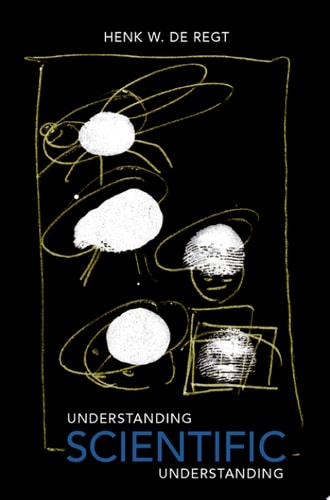
Understanding Scientific Understanding (OXFORD STUDIES IN PHILOS SCIENCE SERIES)
0
0
As an Amazon Associate and affiliate partner, Menrva Books earns from qualifying purchases. Learn more
Author Description
It is widely acknowledged that a central aim of science is to achieve understanding of the world around us, and that possessing such understanding is highly important in our present-day society. But what does it mean to achieve this understanding? What precisely is scientific understanding? These are philosophical questions that have not yet received satisfactory answers. While there has been an ongoing debate about the nature of scientific explanation since Carl Hempel advanced his covering-law model in 1948, the related notion of understanding has been largely neglected, because most philosophers regarded understanding as merely a subjective by-product of objective explanations. By contrast, this book puts scientific understanding center stage. It is primarily a philosophical study, but also contains detailed historical case studies of scientific practice. In contrast to most existing studies in this area, it takes into account scientists' views and analyzes their role in scientific debate and development. The aim of Understanding Scientific Understanding is to develop and defend a philosophical theory of scientific understanding that can describe and explain the historical variation of criteria for understanding actually employed by scientists. The theory does justice to the insights of such famous physicists as Werner Heisenberg and Richard Feynman, while bringing much-needed conceptual rigor to their intuitions. The scope of the proposed account of understanding is the natural sciences: while the detailed case studies derive from physics, examples from other sciences are presented to illustrate its wider validity.
Menrva's Summary
THE THESIS
This book investigates the philosophical nature of scientific understanding, seeking to define what it means for scientists to truly comprehend the world. Henk W. de Regt, a philosopher of science, argues against the traditional view that understanding is merely a subjective byproduct of objective explanation. By integrating historical case studies from physics with philosophical analysis, he develops a theory that accounts for the historical evolution of criteria used by scientists to evaluate their own understanding.
THE SCOPE MAP
What You Will Find
- A philosophical framework for evaluating scientific understanding
- Historical case studies focusing on the development of physics
- Analysis of the views of prominent scientists like Heisenberg and Feynman
- Comparative examples from various natural sciences
Scope Limits
- The primary focus is restricted to the natural sciences
- Does not provide an exhaustive history of all scientific disciplines
THE AUTHORITY PERSPECTIVE
Experts recognize this work as a significant contribution to the philosophy of science, specifically for its attempt to formalize the neglected concept of understanding. Readers frequently note the academic density of the prose, which is intended for scholars and students of philosophy and history of science.
Page Count:
315
Publication Date:
2017-01-01
Publisher:
Oxford University Press
ISBN-10:
0190652934
ISBN-13:
9780190652937
History
Philosophy
Epistemology
Academic
Philosophy of
Mind & Body
Physics
Earth Sciences
Science History
Community Tags
Similar Books