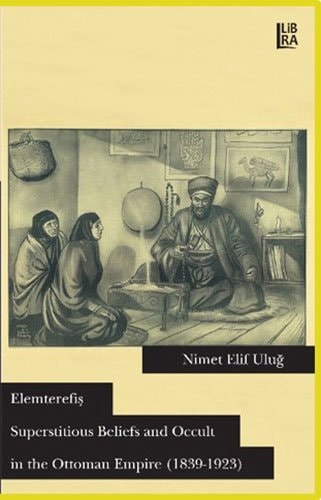
Superstitious Beliefs and Occult in the Ottoman Empire (1839-1923)
0
0
As an Amazon Associate and affiliate partner, Menrva Books earns from qualifying purchases. Learn more
Author Description
This book is about the social history of superstitious beliefs and especially magic and sorcery. I mainly tried to examine how superstitious beliefs and magic transformed the daily life of the Ottoman Empire into a world of superstitions in the nineteenth century. However, I had to go further back when I deepened my research into the origin of superstitious beliefs and magic seen in almost every period of the Ottoman Empire. I looked at polytheistic religions like shamanism, Animism, Manichaenism, Buddhism and Hinduism, which were the common religious beliefs of the former Turkish world. I included various other pagan religions and cultures underlying the past of the Ottoman geography over three continents as well as Judaism, Zoroastrianism, Christianity, the Sky God belief in Central Asia and finally Islam.. In the Ottoman Empire, "professional" magicians were of the ulema class who were not reluctant to utilize religious knowledge for their personal interests. In fact, they began to live immorally; "amateur" magicians were composed of occult groups, a.k.a. pseudo-clergy. I followed magic and magicians included in the documents of the Prime Ministry Ottoman State Archives only as they were caught as a result of a complaint. Füsun and Efsun, daughters of Cinci Arif Hoca, and their story add local and authentic flavor to the points made in the book.
Menrva's Summary
THE THESIS
This book investigates the pervasive influence of superstitious beliefs, magic, and sorcery on the social fabric of the Ottoman Empire during the 19th century. The author examines how these elements transformed daily life, tracing their origins back through various religious and cultural traditions that shaped the region. The research delves into the roles of both 'professional' magicians, often from the ulema class, and 'amateur' occult practitioners, drawing evidence from Ottoman State Archives.
THE SCOPE MAP
- An examination of superstitious beliefs and magic in the Ottoman Empire from 1839-1923.
- Exploration of the transformation of daily life into a world of superstitions.
- Tracing the origins of beliefs through shamanism, Animism, Manichaenism, Buddhism, Hinduism, Judaism, Zoroastrianism, Christianity, Sky God belief, and Islam.
- Analysis of 'professional' magicians from the ulema class and 'amateur' occult groups.
- Use of documents from the Prime Ministry Ottoman State Archives, focusing on cases resulting from complaints.
- Inclusion of the story of Füsun and Efsun, daughters of Cinci Arif Hoca, to provide authentic detail.
THE AUTHORITY PERSPECTIVE
The book offers a detailed social history of superstition and magic within the Ottoman Empire, focusing on the 19th century but extending its research into earlier periods to trace the origins of these beliefs. It highlights the complex interplay between religious knowledge and occult practices, examining the roles of various practitioners. The use of archival documents provides a grounded perspective on how these phenomena manifested and were policed. The narrative is enriched by specific case studies, such as the story of Cinci Arif Hoca's daughters, offering a localized and authentic flavor to the broader historical analysis.
Page Count:
522
Publication Date:
2016-01-01
Publisher:
Libra Kitapçılık ve Yayıncılık
ISBN-10:
605902260X
ISBN-13:
9786059022606
History
Non-Fiction
Social History
Superstition
Occult
Ottoman Empire
Magic
Religious History
Community Tags
Similar Books