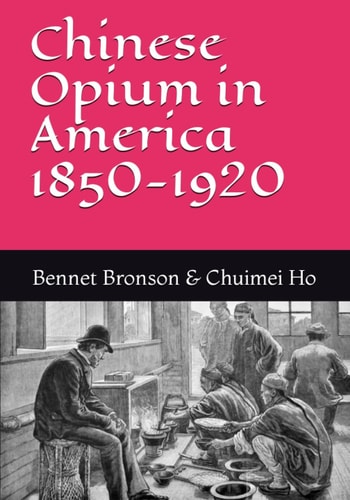
Chinese Opium in America, 1850-1920
0
0
As an Amazon Associate and affiliate partner, Menrva Books earns from qualifying purchases. Learn more
Author Description
Many Chinese-American historians have tended to shy away from the subject of Chinese opium use in 19th century North America entirely and so have their counterparts in Asia. Opium use among Chinese immigrants was widespread, economically important, and -- until 1908-9 -- perfectly legal in most parts of the United States and Canada. Opium made hard lives more bearable and, perhaps due to easy availability and modest prices, seems not to have caused nearly as much violent crime as alcohol did then or as opioid drugs like heroin and fentanyl do nowadays. Our discussion focused on the abundant texts and artifacts relating to opium found at Chinese sites on this continent. As of now, more hard data on Chinese opium use is available at those sites than anywhere else in the world, including China itself. We have made several important discoveries when summarizing that data. For one thing, opium was not a profitable commodity in the U.S. and Canada during the 19th century. For another, as has not been previously recognized, the containers and equipment associated with the drug can quite easily be traced to their sources. Historians and archaeologists will find such information essential to their work
Menrva's Summary
THE THESIS
This book investigates the pervasive yet often overlooked history of Chinese opium use in North America between 1850 and 1920.
Authors Bennet Bronson and Chuimei Ho address a subject that many historians have avoided, detailing the widespread and economically significant use of opium among Chinese immigrants during a period when it was largely legal. Drawing on extensive textual and artifactual evidence from Chinese sites across the continent, the authors present new findings that challenge previous understandings. Their research indicates that opium was not a profitable commodity in the U.S. and Canada during this era, and importantly, that the containers and equipment associated with its use are traceable to their origins, offering crucial insights for historical and archaeological study.
THE SCOPE MAP
- Analysis of opium use among Chinese immigrants in North America from 1850 to 1920.
- Examination of historical texts and artifacts found at Chinese sites.
- Discussion on the economic viability of opium as a commodity in the U.S. and Canada during the 19th century.
- Identification of traceable sources for opium containers and equipment.
- Insights into the social and historical context of opium use compared to alcohol and modern opioids.
THE AUTHORITY PERSPECTIVE
The book's premise suggests a rigorous academic approach, likely appealing to historians and archaeologists specializing in Chinese-American history and the study of drug use. The authors' focus on primary textual and artifactual evidence from North American sites indicates a deep dive into a specific historical niche. The work appears poised to offer novel interpretations regarding the profitability and traceability of opium-related materials, contributing new data to the field.
Page Count:
199
Publication Date:
2023-01-01
Publisher:
Chinese in Northwest America Research Committee (CINARC)
ISBN-13:
9798395301833
History
Non-Fiction
Social History
Asian Studies
Drug Policy
Community Tags
Similar Books