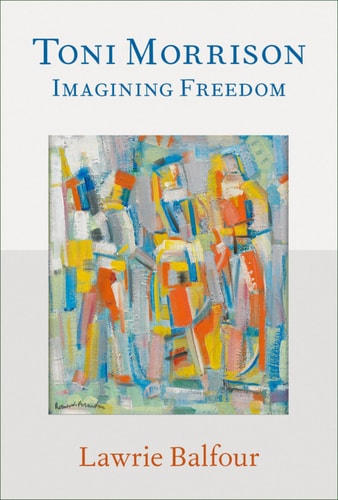
Toni Morrison: Imagining Freedom
0
0
As an Amazon Associate and affiliate partner, Menrva Books earns from qualifying purchases. Learn more
Author Description
When Toni Morrison declares that she “can't wait for the ultimate liberation theory to imagine its practice and do its work,” she raises an issue at the heart of modern political thought: How should we understand freedom? And what does freedom mean in the shadow of racial slavery and colonialism? In this study of Toni Morrison's writing, Lawrie Balfour explores Morrison's reflections on the idea of freedom in her novels and nonfiction. While Morrison's literary achievements are widely celebrated, her political thought has yet to receive the same attention. Balfour shows how Morrison's writing illuminates the meanings of freedom and unfreedom in a democratic society founded on both the defense of liberty and the right to enslavement. Morrison's fiction and meditations on the power of language challenge wishful notions of color-blindness and complaints that it is time to move beyond thinking and talking about race. Her attentiveness to the experiences of people “no one inquired of”--especially her interest in the lives of black women and girls--reorients democratic study toward racial slavery, settler colonialism, and the ongoing processes of theft and domination instituted by these practices. Morrison's writings kindle new forms of freedom-seeking that do not rely on the subjugation of others.
Menrva's Summary
THE THESIS
How does Toni Morrison’s literary and non-fiction work redefine the concept of freedom within the context of a democratic society built upon the history of racial slavery and colonialism? Lawrie Balfour, a scholar of political theory, examines Morrison’s body of work to extract a distinct political philosophy that challenges traditional liberal notions of liberty. By analyzing both the novels and essays, Balfour argues that Morrison’s focus on the experiences of marginalized black women provides a necessary framework for understanding the ongoing impacts of settler colonialism and systemic domination. The book posits that Morrison’s writing serves as a critical tool for reimagining freedom in ways that do not necessitate the subjugation of others.
THE SCOPE MAP
What You Will Find
- A critical analysis of Morrison’s novels and non-fiction essays through a political theory lens.
- An examination of the paradox of American democracy as a system founded on both liberty and enslavement.
- A study of how language and storytelling function as tools for political resistance.
Scope Limits
- The book does not provide a comprehensive literary biography of Morrison’s life.
- It does not offer a general survey of all African American political thought, focusing specifically on Morrison’s unique contributions.
THE AUTHORITY PERSPECTIVE
Scholars and political theorists frequently cite this work as a significant contribution to the intersection of literature and political philosophy. Experts highlight the text for its ability to bridge the gap between aesthetic analysis and rigorous democratic theory.
Page Count:
237
Publication Date:
2023-01-01
Publisher:
Oxford University Press
ISBN-10:
0190673303
ISBN-13:
9780190673307
Philosophy
Non-Fiction
Social Theory
African American
Literary Criticism
Political Philosophy
Community Tags
Similar Books