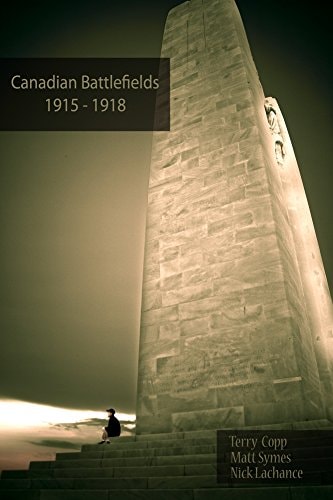
Canadian Battlefields 1915–1918: A Visitor’s Guide
0
0
As an Amazon Associate and affiliate partner, Menrva Books earns from qualifying purchases. Learn more
Author Description
Most of the world remembers the First World War as a time when, as historian Samuel Hynes put it, “innocent young men, their heads full of high abstractions like Honour, Glory, and England... were slaughtered in stupid battles planned by stupid Generals.” English-speaking Canadians have for the most part accepted this view and supplemented it with an imaginative version of a war in which their soldiers won great victories and forged a new national identity. Both approaches have served to promote literary, political, and cultural agendas of such power that empirical studies of actual wartime events have had little impact on the historiography. A new generation of scholars has challenged those approaches, however, insisting that the reality of the war and the society that produced it are worthy of study. This guide to the Canadian battlefields in France and Belgium offers a brief critical history of the war and of Canada’s contribution, drawing attention to the best recent books on the subject. It focuses on the Ypres Salient, Passchendaele, Vimy, and the “Hundred Day”s battles and considers lesser-known battlefields as well. Battle maps, contemporary maps, photographs, war art, and tourist information enhance the reader experience.
Menrva's Summary
THE THESIS
This guide examines the significant Canadian battlefields of World War I in France and Belgium, offering a critical historical overview and practical visitor information. The book challenges traditional, often romanticized, views of Canada's role in the war by presenting recent scholarly research. It focuses on key locations such as the Ypres Salient, Passchendaele, Vimy Ridge, and the final Hundred Days Offensive, while also exploring lesser-known sites. The authors integrate historical analysis with contemporary maps, battle maps, photographs, war art, and essential tourist details to provide a comprehensive experience for visitors and students of the conflict.
THE SCOPE MAP
- A critical history of World War I and Canada's involvement.
- Focus on major battlefields: Ypres Salient, Passchendaele, Vimy, and the Hundred Days' battles.
- Exploration of lesser-known Canadian battle sites.
- Integration of battle maps and contemporary maps.
- Inclusion of historical photographs and war art.
- Practical tourist information for visiting the battlefields.
THE AUTHORITY PERSPECTIVE
This guide is presented as a resource for understanding the reality of World War I beyond popular narratives, drawing on recent scholarship to inform its historical accounts. The inclusion of maps, photographs, and tourist information suggests it is designed for both academic interest and practical application by visitors to the battlefields. The authors aim to provide a more empirical view of the war, contrasting with prevailing literary and political interpretations of Canada's role and national identity formation.
Page Count:
130
Publication Date:
2011-11-03
Publisher:
Laurier Centre for Military, Strategic and Disarmament Studies
ISBN-10:
1926804112
ISBN-13:
9781926804118
Non-Fiction
History
Battlefields
Travel Guide
Military History
Community Tags
Similar Books