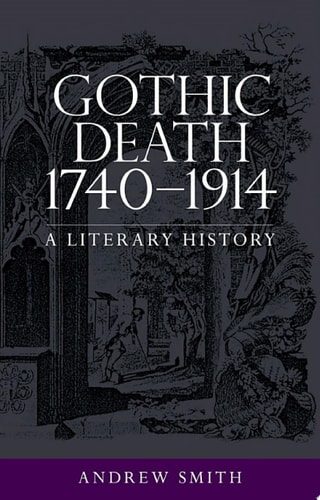
Gothic Death 1740–1914
0
0
As an Amazon Associate and affiliate partner, Menrva Books earns from qualifying purchases. Learn more
Author Description
Gothic death 1740-1914 explores the representations of death and dying in Gothic narratives published between the mid-eighteenth century and the beginning of the First World War. The book investigates how eighteenth century Graveyard Poetry and the tradition of the elegy produced a version of death that underpinned ideas about empathy and models of textual composition. Later accounts of melancholy, as in the work of Ann Radcliffe and Mary Shelley, emphasise the literary construction of death. The shift from writing death to interpreting the signs of death is explored in relation to the work of Poe, Emily Brontë and George Eliot. A chapter on Dickens examines the significance of graves and capital punishment during the period. A chapter on Haggard, Stoker and Wilde explores conjunctions between love and death and a final chapter on Machen and Stoker explores how scientific ideas of the period help to contextualise a specifically fin de siècle model of death.
Menrva's Summary
THE THESIS
This book investigates the evolving representations of death and dying within Gothic literature from 1740 to 1914. Andrew J. Smith, drawing on his expertise in literary studies, examines how different historical periods and literary movements shaped the perception and depiction of mortality. The book traces a trajectory from early elegiac traditions to the fin de siècle's engagement with scientific ideas, arguing that these narratives reveal profound cultural anxieties and literary innovations surrounding death.
THE SCOPE MAP
- Analysis of death representations in Gothic narratives from 1740-1914.
- Exploration of eighteenth-century Graveyard Poetry and elegiac traditions.
- Examination of melancholy and the literary construction of death in authors like Ann Radcliffe and Mary Shelley.
- Discussion of the shift from writing death to interpreting its signs, featuring Poe, Emily Brontë, and George Eliot.
- Analysis of the significance of graves and capital punishment in Dickens's work.
- Exploration of the conjunctions between love and death in Haggard, Stoker, and Wilde.
- Contextualization of fin de siècle death models through scientific ideas, focusing on Machen and Stoker.
THE AUTHORITY PERSPECTIVE
This scholarly work is likely to be regarded as a comprehensive and insightful analysis of a specific thematic element within a significant literary tradition. Its chronological approach and engagement with a range of canonical and lesser-known authors suggest a text valuable for students and scholars of Gothic literature, literary history, and cultural studies. The detailed chapter breakdown indicates a thorough exploration of the subject matter, providing a solid foundation for understanding the evolving cultural and literary discourse on death.
Page Count:
232
Publication Date:
2016-09-01
Publisher:
Manchester University Press
ISBN-10:
1526101084
ISBN-13:
9781526101082
Non-Fiction
History
Literary Criticism
Gothic
Death Studies
Community Tags
Similar Books