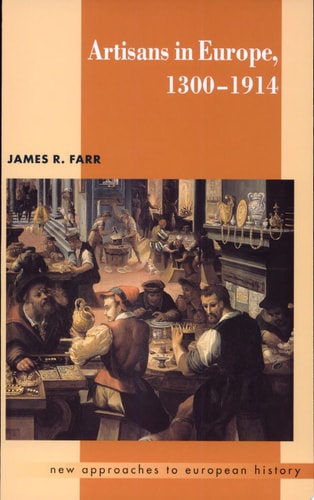
Artisans in Europe, 1300-1914
0
0
As an Amazon Associate and affiliate partner, Menrva Books earns from qualifying purchases. Learn more
Author Description
This book is a survey of the history of work in general and of European urban artisans in particular, from the late middle ages to the era of industrialization. Unlike traditional histories of work and craftsmen, this book offers a multi-faceted understanding of artisan experience situated in the artisans' culture. It treats economic and institutional topics, but also devotes considerable attention to the changing ideologies of work, the role of government regulation in the world of work, the social history of craftspeople, the artisan in rebellion against the various authorities in his world, and the ceremonial and leisure life of artisans. Women, masters, journeymen, apprentices, and non-guild workers all receive substantial treatment. The book concludes with a chapter on the nineteenth century, examining the transformation of artisan culture, exploring how and why the early modern craftsman became the industrial wage-worker, mechanic or shopkeeper of the modern age.
Menrva's Summary
THE THESIS
This book surveys the history of work in Europe, focusing on urban artisans from the late Middle Ages to industrialization. It moves beyond traditional economic and institutional accounts to explore the multifaceted experiences of artisans within their own culture, examining changing ideologies of work, government regulation, social history, rebellion, and ceremonial life. The work provides substantial treatment for women, masters, journeymen, apprentices, and non-guild workers, concluding with an analysis of the transformation of artisan culture in the nineteenth century and the transition to the industrial age.
THE SCOPE MAP
- A survey of European urban artisans from the late Middle Ages to the era of industrialization.
- Analysis of economic and institutional topics related to craft work.
- Exploration of changing ideologies of work and the role of government regulation.
- Social history of craftspeople, including their rebellions and ceremonial life.
- Detailed examination of women, masters, journeymen, apprentices, and non-guild workers.
- A concluding chapter on the transformation of artisan culture in the nineteenth century.
THE AUTHORITY PERSPECTIVE
The book is recognized as a comprehensive survey of European artisan history, offering a multi-faceted understanding of their experience by situating it within their culture. It is noted for its broad scope, covering economic, social, and ideological aspects of craft work, and for its detailed treatment of various social strata within the artisan class. The concluding analysis of the transition from early modern craftsmen to industrial workers is a key feature. The work is considered a significant contribution to the history of work and European social history.
Page Count:
306
Publication Date:
2000-08-17
Publisher:
Cambridge University Press
ISBN-10:
052142934X
ISBN-13:
9780521429344
History
Non-Fiction
Crafts
Labor history
Economic History
Social History
European History
Community Tags
Similar Books