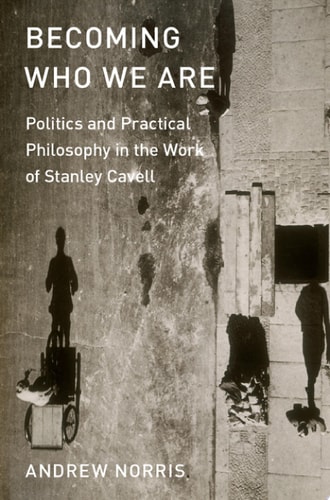
Becoming Who We Are: Politics and Practical Philosophy in the Work of Stanley Cavell
0
0
As an Amazon Associate and affiliate partner, Menrva Books earns from qualifying purchases. Learn more
Author Description
While much literature exists on the work of Stanley Cavell, this is the first monograph on his contribution to politics and practical philosophy. As Andrew Norris demonstrates, though skepticism is Cavell's central topic, Cavell understands it not as an epistemological problem or position, but as an existential one. The central question is not what we know or fail to know, but to what extent we have made our lives our own, or failed to do so. Accordingly, Cavell's reception of Austin and Wittgenstein highlights, as other readings of these figures do not, the uncanny nature of the ordinary, the extent to which we ordinarily fail to mean what we say and be who we are. Becoming Who We Are charts Cavell's debts to Heidegger and Thompson Clarke, even as it allows for a deeper appreciation of the extent to which Cavell's Emersonian Perfectionism is a rewriting of Rousseau's and Kant's theories of autonomy. This in turn opens up a way of understanding citizenship and political discourse that develops points made more elliptically in the work of Hannah Arendt, and that contrasts in important ways with the positions of liberal thinkers like John Rawls and Jürgen Habermas on the one hand, and radical democrats like Ernesto Laclau and Chantal Mouffe on the other.
Menrva's Summary
THE THESIS
This book investigates the intersection of Stanley Cavell’s philosophical work with political theory and practical philosophy, specifically addressing the existential nature of skepticism. Andrew Norris, an expert in political philosophy, utilizes Cavell’s interpretations of Austin, Wittgenstein, and Emerson to argue that skepticism is a failure to own one's life rather than a mere epistemological puzzle. The text provides a rigorous framework for understanding citizenship and political discourse by contrasting Cavell’s perfectionism with the theories of Rawls, Habermas, and radical democratic thinkers.
THE SCOPE MAP
What You Will Find
- Analysis of Cavell’s engagement with Heidegger and Thompson Clarke
- A re-evaluation of Emersonian Perfectionism as a response to Rousseau and Kant
- Comparative studies between Cavell and contemporary political theorists like Arendt, Rawls, and Habermas
Scope Limits
- The text does not provide a general introduction to Cavell’s entire body of work
- It does not focus on the epistemological debates surrounding skepticism in analytic philosophy
THE AUTHORITY PERSPECTIVE
Scholars recognize this monograph as a significant contribution to the field for being the first to systematically connect Cavell’s thought to political philosophy. Readers frequently note the academic density of the prose, which is intended for those already familiar with the primary philosophical texts discussed.
Page Count:
322
Publication Date:
2017-01-01
Publisher:
Oxford University Press
ISBN-10:
0190673966
ISBN-13:
9780190673963
Non-Fiction
Philosophy
Political Theory
Professional Career & Trade
Academic
History & Surveys
Political Philosophy
Community Tags
Similar Books