Society in the Self
0
0
As an Amazon Associate and affiliate partner, Menrva Books earns from qualifying purchases. Learn more
Author Description
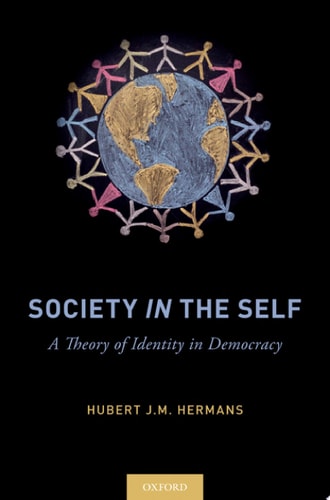
Instead Of Considering Society As A Social Environment, Society In The Self Begins From The Assumption That Society Works In The Deepest Regions Of Self And Identity, As Expressed In Phenomena Like Self-sabotage, Self-radicalization, Self-cure, Self-government, Self-nationalization, And Self-internationalization. This Leads To The Central Thesis That A Democratic Society Can Only Function Properly If It Is Populated By Participants With A Democratically Organized Self. In This Book, An Integrative Model Is Presented That Is Inspired By Three Versions Of Democracy: Cosmopolitan, Deliberative, And Agonistic Democracy, With The Latter Focusing On The Role Of Social Power And Emotions. Drawing On These Democratic Views, Three Levels Of Inclusiveness Are Distinguished In The Self: Personal (i As An Individual), Social (i As A Member Of A Group), And Global (i As A Human Being). A Democratic Self Requires The Flexibility Of Moving Up And Down Across These Levels Of Inclusiveness And Has To Find Its Way In Fields Of Tension Between The Self And The Other, And Between Dialogue And Social Power. As Author Hubert Hermans Explains, This Theory Has Far Reaching Consequences For Such Divergent Topics As Leadership In The Self, Cultural Diversity In The Self, The Relationship Between Reason And Emotion, Self-empathy, Cooperation And Competition Between Self-parts, And The Role Of Social Power In Prejudice, Enemy Image Construction, And Scapegoating. The Central Message Of This Book Is Reflected In Mahatma Gandhi's Dictum: Be The Change You Want To See In The World.
Menrva's Summary
THE THESIS
Can a democratic society function effectively if the individuals within it do not possess a democratically organized self? Hubert J. M. Hermans, a prominent psychologist known for his work on Dialogical Self Theory, argues that societal structures are mirrored within the internal landscape of the individual. He posits that personal, social, and global levels of identity must be integrated and flexible to navigate the tensions between dialogue and power, ultimately suggesting that external democracy relies on internal psychological organization.
THE SCOPE MAP
What You Will Find
- An integrative model of the self inspired by cosmopolitan, deliberative, and agonistic democracy.
- A framework for understanding self-sabotage, self-radicalization, and self-empathy.
- Analysis of the interplay between reason, emotion, and social power.
Scope Limits
- The text does not provide a clinical manual for psychotherapy or specific behavioral modification techniques.
- It does not offer a comprehensive history of political science, focusing instead on the psychological application of democratic principles.
THE AUTHORITY PERSPECTIVE
Scholars and practitioners in the field of dialogical psychology view this work as a significant extension of Hermans' previous theories into the political and social domain. Readers frequently note the academic density of the prose, which requires careful engagement with the author's specialized terminology regarding self-parts and levels of inclusiveness.
Page Count:
312
Publication Date:
2018-01-01
Publisher:
Oxford University Press
ISBN-10:
0190687800
ISBN-13:
9780190687809
Philosophy
Psychology
Sociology
Identity
Community Tags
Other Editions(2)
Similar Books