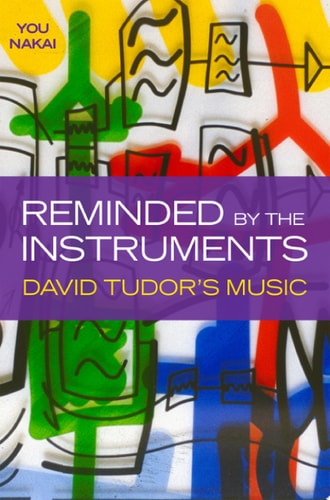
Reminded by the Instruments: David Tudor's Music
0
0
As an Amazon Associate and affiliate partner, Menrva Books earns from qualifying purchases. Learn more
Author Description
David Tudor is remembered today in two guises: as an extraordinary pianist of post-war avant-garde music who worked closely with composers like John Cage and Karlheinz Stockhausen and as a founding figure of live-electronic music. His early realization of indeterminate graphic scores and his later performances using homemade modular instruments both inspired a whole generation of musicians. But his reticence, his unorthodox approaches, and the diversity of his creative output — which began with the organ and ended with visual art — have kept Tudor a puzzle. Illustrated with more than 300 images of diagrams, schematics, and photographs of Tudor's instruments, Reminded by the Instruments sets out to solve the puzzle of David Tudor by applying Tudor's own methods for approaching the materials of others to the vast archive of materials that he himself left behind. You Nakai deftly patches together instruments, electronic circuits, sketches, diagrams, recordings, letters, receipts, customs declaration forms, and testimonies like modular pieces of a giant puzzle to reveal the long-hidden nature of Tudor's creative process. Rejecting the established narrative of Tudor as a performer-turned-composer, this book presents a lively portrait of an artist whose activity always merged both of these roles. In reading Tudor's electronic devices as musicological 'texts' and examining his idiosyncratic use of electronic circuits, Nakai undermines discourses on sound and illuminates our understanding of the instruments behind the sounds in post-war experimental music.
Menrva's Summary
THE THESIS
This book investigates the creative process and artistic identity of David Tudor by treating his electronic instruments as primary musicological texts. Author You Nakai, a scholar of experimental music, utilizes an extensive archive of Tudor's personal materials—including schematics, receipts, and correspondence—to challenge the traditional view of Tudor as merely a performer. By applying Tudor's own methodology of material engagement to his surviving artifacts, Nakai constructs a new framework for understanding the intersection of performance and composition in post-war avant-garde music.
THE SCOPE MAP
What You Will Find
- Analysis of Tudor's transition from organist to pioneer of live-electronic music
- Examination of over 300 diagrams, schematics, and photographs of custom modular instruments
- A methodology for interpreting electronic circuits as historical and musical documents
- Contextualization of Tudor's work alongside contemporaries like John Cage and Karlheinz Stockhausen
Scope Limits
- The text focuses primarily on the technical and material aspects of Tudor's work rather than a traditional chronological biography
- It does not provide a comprehensive discography or exhaustive list of every performance Tudor participated in
THE AUTHORITY PERSPECTIVE
Scholars and musicologists recognize this work as a significant contribution to the study of experimental music, particularly for its innovative approach to archival research. Readers frequently note the technical density of the prose, which requires a foundational understanding of electronic music history to fully appreciate the author's arguments.
Page Count:
767
Publication Date:
2021-01-01
Publisher:
Oxford University Press
ISBN-10:
0190686782
ISBN-13:
9780190686789
Biography
Music
Art History
Engineering
Humanities
Sound acoustics
Musicology
Criticism history
Professional Career & Trade
Music History
Community Tags
Similar Books