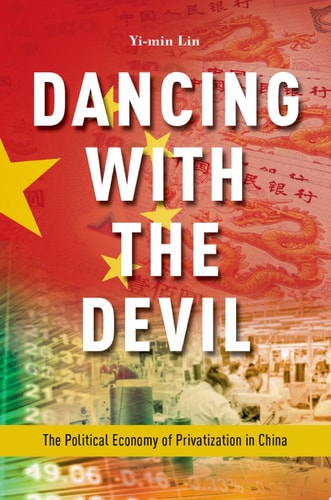
Dancing with the Devil
0
0
As an Amazon Associate and affiliate partner, Menrva Books earns from qualifying purchases. Learn more
Author Description
From 1978 Through The Turn Of The Century, China Was Transformed From A State-owned Economy Into A Predominantly Private Economy. This Fundamental Change Took Place Under The Chinese Communist Party (ccp), Which Has Been Ideologically And Politically Predisposed To Suppress Private Ownership. In Dancing With The Devil, Yi-min Lin Explains How And Why Such A Paradoxical Reality Came About. He Shows That Private Ownership Became A Necessary Evil For The Ccp Because The Public Sector Was Increasingly Unable To Address Two Essential Concerns For Regime Survival: Employment And Revenue. Focusing On Political Actors As Major Change Agents, Lin Examines How Their Self-interested Behavior Led To The Decline Of Public Ownership In The Context Of China's Evolving Demographics And Fiscal System. The Constraints And Incentives Associated With These Factors Help Explain Ccp Leaders' Initial Decision To Allow Limited Private Economic Activities At The Outset Of Reform. They Also Shed Light On The Ballooning Opportunism Among Lower Officials, Which Undermined The Vitality Of Public Enterprises. Furthermore, They Hold A Key To Understanding The Timing Of The Massive Privatization In The Late 1990s, As Well As Its Tempo And Spread Thereafter. Dancing With The Devil Illustrates How The Driving Forces Developed And Played Out In These Intertwined Episodes Of The Story. In So Doing, It Offers New Insights Into The Mechanisms Of China's Economic Transformation And Enriches Theories Of Institutional Change.
Menrva's Summary
THE THESIS
This book investigates the paradox of how the Chinese Communist Party, an organization ideologically opposed to private ownership, oversaw the transition of China from a state-owned economy to a predominantly private one between 1978 and the turn of the century. Yi-min Lin, a scholar of political economy, utilizes institutional analysis to argue that private ownership became a functional necessity for the regime. By examining the self-interested behavior of political actors, Lin demonstrates how the failure of the public sector to secure employment and revenue forced the CCP to permit and eventually embrace private economic activity as a survival strategy.
THE SCOPE MAP
What You Will Find
- Analysis of the transition from state-owned to private economic models in China from 1978 to 2000.
- Examination of the political incentives and constraints influencing CCP leadership decisions.
- Investigation into the role of lower-level officials in the decline of public enterprises.
Scope Limits
- The analysis focuses primarily on the political and economic mechanisms of the late 20th century and does not cover contemporary post-2000 economic developments.
THE AUTHORITY PERSPECTIVE
Experts recognize this work as a significant contribution to the study of institutional change and the political economy of transition states. Readers frequently note the academic density of the prose, which provides a rigorous framework for understanding the complex interplay between political survival and economic reform.
Page Count:
304
Publication Date:
2017-01-01
Publisher:
Oxford University Press
ISBN-10:
0190682841
ISBN-13:
9780190682842
Economics
Chinese History
Public Policy
Institutional Change
Community Tags
Other Editions(2)

Similar Books