Victor Vasarely 1906-1997: Das Reine Sehen
0
0
As an Amazon Associate and affiliate partner, Menrva Books earns from qualifying purchases. Learn more
Author Description
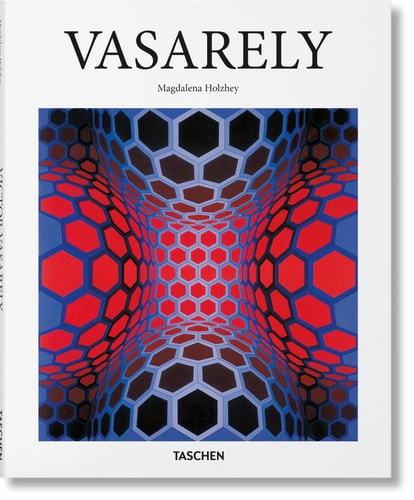
Hungarian-French painter Victor Vasarely (1906–1997) was a precocious talent. His earliest surviving painting, a landscape done at age 12, baffled through its realism―an indication of the compelling illusions of spatial depth that would later define his dazzling universe. Inspired by the likes of Malevich and the Bauhaus school, Vasarely developed his own abstract-geometric visual language, exploring the relationship between pure form and pure color. Vasarely’s experimentation with optical effects in the 1940s and ’50s earned him a central role in the evolution of Op Art. By the late ’50s and early ’60s, he concentrated on the “democratization of art” by producing “multiples”―reasonably priced original works reproduced in large editions. Vasarely’s attempt to “destroy the completely obsolete myth of the unique, inimitable masterwork” was a tremendous contribution to art theory. To him, there was no place for hierarchical division into originals and reproductions, nor for distinction between fine and commercial art―“We cannot leave the enjoyment of art to an elite of connoisseurs forever,” he declared. This redefinition of the artist’s position and function in society marked a crucial first step in the Pop Art movement. Vasarely’s boldly colorful and eye-popping paintings are instantly recognizable and remain entirely modern and relevant today. In this dependable introduction, we explore the makings of an artist ahead of his time. Crisp reproductions and insightful texts celebrate the father of the Op Art movement, from his earliest hypnotizing optical illusions to his hallmark checkerboard works.
Menrva's Summary
THE THESIS
This book explores the life and work of Victor Vasarely, a pioneering artist who shaped the Op Art movement. Magdalena Holzhey's introduction delves into Vasarely's early precociousness, his development of an abstract-geometric visual language inspired by movements like the Bauhaus, and his significant contributions to art theory. The book examines his experimentation with optical effects, his late-career focus on the "democratization of art" through "multiples," and his redefinition of the artist's role in society, which influenced the Pop Art movement.
THE SCOPE MAP
- Exploration of Victor Vasarely's early artistic development and influences, including Malevich and the Bauhaus.
- Analysis of Vasarely's unique abstract-geometric visual language and his exploration of form and color.
- Detailed look at his pioneering work in optical effects and his central role in the evolution of Op Art.
- Discussion of his late-career commitment to the "democratization of art" through the production of "multiples."
- Examination of Vasarely's theoretical contributions, particularly his challenge to the concept of the unique masterwork.
- Contextualization of Vasarely's influence on the Pop Art movement.
- Showcase of Vasarely's iconic checkerboard works and hypnotizing optical illusions.
- Includes crisp reproductions and insightful texts celebrating the artist.
THE AUTHORITY PERSPECTIVE
This introduction to Victor Vasarely is likely to be appreciated by art enthusiasts interested in Op Art and modern art movements. The book's focus on Vasarely's theoretical contributions, such as his ideas on the democratization of art, suggests it will appeal to readers interested in the social and conceptual aspects of art history. The inclusion of reproductions and insightful texts indicates a comprehensive overview suitable for both newcomers to Vasarely's work and those seeking a deeper understanding of his impact.
Page Count:
0
Publication Date:
2018-01-01
Publisher:
TASCHEN
ISBN-10:
3836573938
ISBN-13:
9783836573931
Art
Biography
Non-Fiction
Modern Art
Community Tags
Similar Books