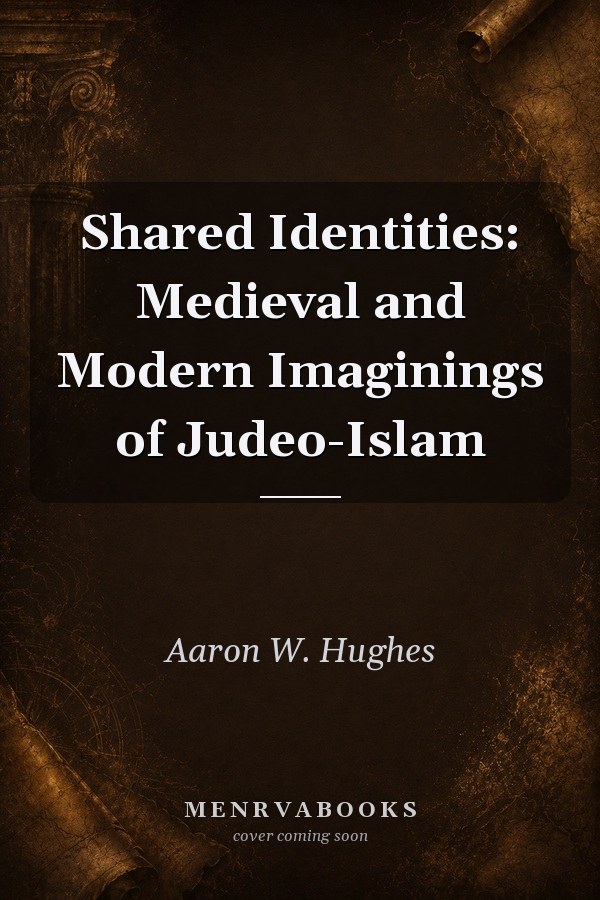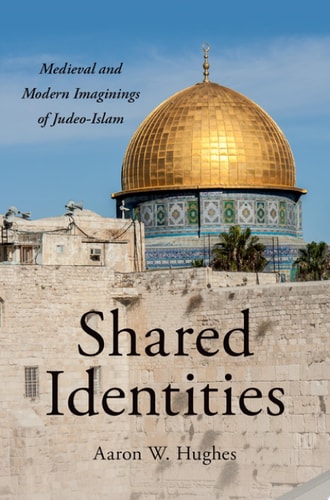
Shared Identities
0
0
As an Amazon Associate and affiliate partner, Menrva Books earns from qualifying purchases. Learn more
Author Description
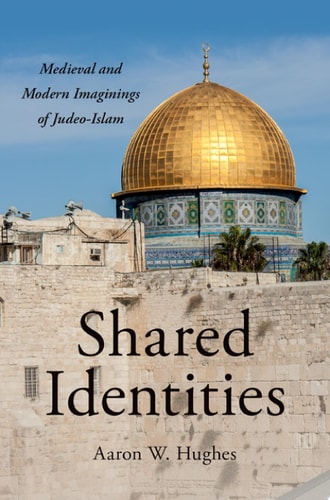
In This Controversial Study, Aaron W Hughes Breaks With Received Opinion That Imagines Two Distinct Religions, Judaism And Islam, Interacting In The Centuries Immediately Following The Death Of Muhammad In The Early Seventh Century. Tradition Describes These Relations Using Tropes Such As That Of Symbiosis. Hughes Instead Argues That Various Porous Groups--neither Fully Muslim Nor Jewish--exploited A Shared Terminology To Make Sense Of Their Social Worlds In Response To The Rapid Process Of Islamicization. What Emerged As Normative Rabbinic Judaism On The One Had, And Sunni And Shi'i Islam On The Other Were Ultimately Responses To Such Marginal Groups. Even The Spread Of Rabbinic Judaism, Especially In The Hands Of Saadya Gaon (882-942 Ce), Was Articulate Islamically. The Emergence Of The So-called Golden Age In Places Such As Muslim Spain And North Africa Continued To See The Articulation Of This Islamic Judaism In The Writings Of Luminaires Such As Bahya Ibn Paquda, Abraham Ibn Ezra, Judah Halevi, And Moses Maimonides. Drawing On Social Theory, Comparative Religion, And Original Sources, Hughes Presents A Compelling Case For Rewriting Our Understanding Of Jews And Muslims In Their Earliest Centuries Of Interaction. Not Content To Remain Solely In The Past, However, He Also Examines The Continued Interaction Of Muslims And Jews, Now Reimagined As Palestinians And Israelis, Into The Present-- 1. Symbiosis: Rethinking A Paradigm -- 2. Origins -- 3. Messianism In The Shadows -- 4. The Manufacture Of Orthodoxy -- 5. Et In Arcadia Ego -- 6. Re-frame -- Conclusion: Two Solitudes. Aaron W. Hughes. Includes Bibliographical References And Index.
Menrva's Summary
THE THESIS
Does the traditional paradigm of distinct, symbiotic religious identities accurately reflect the historical reality of early Judaism and Islam? Aaron W. Hughes, a scholar of religion, challenges the conventional narrative that views Judaism and Islam as separate, interacting entities in the post-Muhammad era. By applying social theory to historical texts, he argues that early religious identities were porous and fluid, with normative traditions emerging only as a reaction to these ambiguous, shared social worlds. He posits that the development of both Rabbinic Judaism and early Islamic sects was deeply intertwined, with even prominent figures like Maimonides operating within a shared, Islamicized conceptual framework.
THE SCOPE MAP
What You Will Find
- Analysis of the transition from early seventh-century religious fluidity to the formation of normative orthodoxy.
- Examination of the influence of Islamic terminology on the development of Rabbinic Judaism.
- Case studies of historical figures including Saadya Gaon, Bahya ibn Paquda, and Moses Maimonides.
- Application of social theory to the study of religious identity and boundary-making.
Scope Limits
- The text does not provide a comprehensive history of either religion in isolation.
- It does not offer a detailed political history of the regions beyond its focus on religious identity formation.
THE AUTHORITY PERSPECTIVE
Scholars and students of religious history frequently note the academic density of the prose and the provocative nature of Hughes's revisionist framework. Experts highlight this as a significant contribution to the field of comparative religion, particularly for its challenge to established narratives regarding the origins of Jewish and Islamic orthodoxy.
Page Count:
256
Publication Date:
2017-01-01
Publisher:
Oxford University Press, Incorporated
ISBN-10:
019068447X
ISBN-13:
9780190684471
History
Religion
Middle Eastern
Judaism
Social Theory
Islam
Community Tags
Similar Books