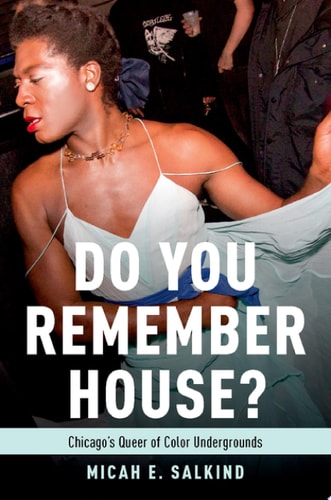
Do You Remember House?: Chicago's Queer of Color Undergrounds
0
0
As an Amazon Associate and affiliate partner, Menrva Books earns from qualifying purchases. Learn more
Author Description
This interdisciplinary study historicizes house music, the rhythmically focused electronic dance sound born in the post-industrial maroon spaces of Chicago's queer, Black, and Latino social dancers. Working from oral history interviews, archival research, and performance ethnography, it argues that the remediation and adaptation of house by multiple and overlapping crossover communities in its first decade shaped the ways that contemporary Chicago house music producers, DJs, dancers, and promoters re-remember and re-animate house as an archive indexing experiences of queer of colour congregation. Micah Salkind. Previously issued in print: 2019. Includes bibliographical references and index.
Menrva's Summary
THE THESIS
How did the emergence and early evolution of house music in Chicago function as a site for queer of color social congregation and cultural preservation? Micah E. Salkind, a scholar of music and cultural studies, utilizes a multidisciplinary framework to examine the origins of house music. By synthesizing oral histories, archival records, and ethnographic fieldwork, the author argues that house music served as a critical medium for marginalized communities to document and perform their social identities within the post-industrial landscape of Chicago.
THE SCOPE MAP
What You Will Find
- Historical analysis of Chicago's underground dance scene during the 1980s and 1990s.
- Examination of the intersection between Black, Latino, and queer social dance cultures.
- Methodology incorporating performance ethnography and archival research.
Scope Limits
- The study focuses primarily on the first decade of house music development.
- It does not provide a comprehensive technical guide to music production or DJ equipment.
THE AUTHORITY PERSPECTIVE
Scholars and music historians recognize this work as a significant contribution to the study of electronic dance music and urban subcultures. Readers frequently note the academic rigor of the text, which provides a detailed look at the social dynamics behind the genre's development.
Page Count:
0
Publication Date:
1900-01-01
Publisher:
Oxford University Press,
ISBN-10:
0190698454
ISBN-13:
9780190698454
African American
Sociology
Popular music
Dance music
House Music
LGBTQ Studies
Chicago History
Music History
Community Tags
Similar Books