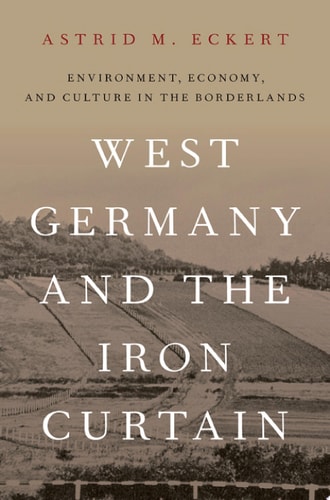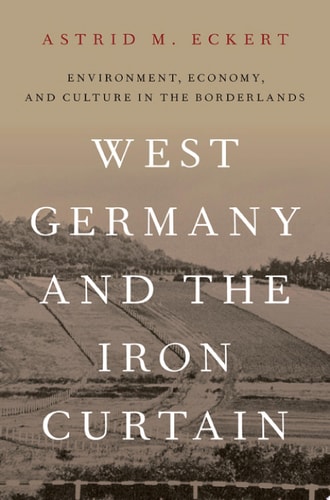
West Germany and the Iron Curtain: Environment, Economy, and Culture in the Borderlands
0
0
As an Amazon Associate and affiliate partner, Menrva Books earns from qualifying purchases. Learn more
Author Description
West Germany and the Iron Curtain takes a fresh look at the history of Cold War Germany and the German reunification process from the spatial perspective of the West German borderlands that emerged along the volatile inter-German border after 1945. These border regions constituted the Federal Republic's most sensitive geographical space where it had to confront partition and engage its socialist neighbor East Germany in concrete ways. Each issue that arose in these borderlands - from economic deficiencies, border tourism, environmental pollution, landscape change, and the siting decision for a major nuclear facility - was magnified and mediated by the presence of what became the most militarized border of its day, the Iron Curtain. In topical chapters, the book addresses the economic consequences of the border for West Germany, which defined the border regions as depressed areas, and examines the cultural practice of western tourism to the Iron Curtain. At the heart of this deeply-researched book stands an environmental history of the Iron Curtain that explores transboundary pollution, landscape change, and a planned nuclear industrial site at Gorleben that was meant to bring jobs into the depressed border regions. The book traces these subjects across the caesura of 1989/90, thereby integrating the "long" postwar era with the post-unification decades. As Eckert demonstrates, the borderlands that emerged with partition and disappeared with reunification did not merely mirror some larger developments in the Federal Republic's history but actually helped to shape them.
Menrva's Summary
THE THESIS
How did the spatial reality of the inter-German border influence the economic, environmental, and cultural development of the Federal Republic of Germany? Astrid M. Eckert, a historian specializing in German and Cold War history, utilizes archival research and spatial analysis to argue that the borderlands were not merely passive victims of partition but active sites where national policy was tested and shaped. The book examines the long postwar era, extending its analysis through the reunification process to demonstrate the lasting impact of the Iron Curtain on regional development.
THE SCOPE MAP
What You Will Find
- Analysis of economic depression and regional development policies in West German border zones.
- Examination of border tourism and the cultural perception of the Iron Curtain.
- Environmental history regarding transboundary pollution and landscape transformation.
- Case study of the nuclear facility siting at Gorleben.
Scope Limits
- The study focuses primarily on the West German side of the border rather than the East German internal experience.
- It does not provide a comprehensive military history of the border fortifications.
THE AUTHORITY PERSPECTIVE
Scholars recognize this work as a significant contribution to the spatial history of the Cold War, noting its ability to bridge environmental and political history. Readers frequently highlight the book's success in integrating local regional developments with broader national narratives of the Federal Republic.
Page Count:
438
Publication Date:
2019-01-01
Publisher:
Oxford University Press
ISBN-10:
0190690070
ISBN-13:
9780190690076
History
Nature
European History
Modern History
Environmental History
Political Geography
German history
Cold War
Germany history
Community Tags
Similar Books