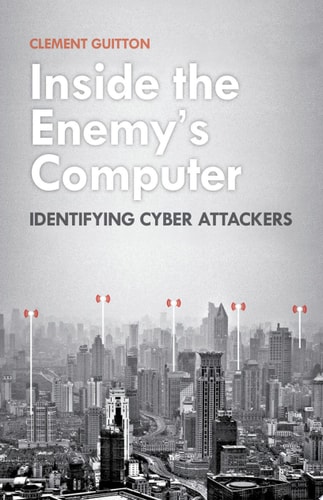
Inside the Enemy's Computer: Identifying Cyber Attackers
0
0
As an Amazon Associate and affiliate partner, Menrva Books earns from qualifying purchases. Learn more
Author Description
Attribution - tracing those responsible for a cyber attack - is of primary importance when classifying it as a criminal act, an act of war, or an act of terrorism. Three assumptions dominate current thinking: attribution is a technical problem; it is unsolvable; and it is unique. Approaching attribution as a problem forces us to consider it either as solved or unsolved. Yet attribution is far more nuanced, and is best approached as a process in constant flux, driven by judicial and political pressures. In the criminal context, courts must assess the guilt of criminals, mainly based on technical evidence. In the national security context, decision-makers must analyse unreliable and mainly non-technical information in order to identify an enemy of the state. Attribution in both contexts is political: in criminal cases, laws reflect society's prevailing norms and powers; in national security cases, attribution reflects a state's will to maintain, increase or assert its power. However, both processes differ on many levels. The constraints, which reflect common aspects of many other political issues, constitute the structure of the book: the need for judgement calls, the role of private companies, the standards of evidence, the role of time, and the plausible deniability of attacks.
Menrva's Summary
THE THESIS
This book investigates the complex, multifaceted process of cyber attribution, challenging the common assumption that identifying the source of a cyber attack is merely a technical problem. Clement Guitton, a researcher in the field of international security and cyber policy, argues that attribution is a dynamic process shaped by judicial and political pressures rather than a binary state of being solved or unsolved. By examining the divergent requirements of criminal law and national security, the author provides a framework for understanding how states and legal systems navigate the identification of digital adversaries.
THE SCOPE MAP
What You Will Find
- A comparative analysis of attribution in criminal versus national security contexts
- Examination of the role of private sector entities in digital investigations
- Discussion on the impact of plausible deniability and standards of evidence
- Analysis of the political nature of state-level attribution
Scope Limits
- Does not provide a technical manual for performing forensic network analysis
- Does not focus on specific historical cyber attack case studies in exhaustive detail
THE AUTHORITY PERSPECTIVE
Experts in the field of international relations and cybersecurity recognize this work as a significant contribution to the study of cyber policy. Readers frequently note the analytical depth of the prose, which moves beyond technical jargon to address the broader political implications of digital conflict.
Page Count:
320
Publication Date:
2017-09-01
Publisher:
Oxford University Press
ISBN-10:
019069999X
ISBN-13:
9780190699994
Hackers
Technology
International relations
Law
Terrorism
Computer Crimes
Cybersecurity
National security
Community Tags
Similar Books