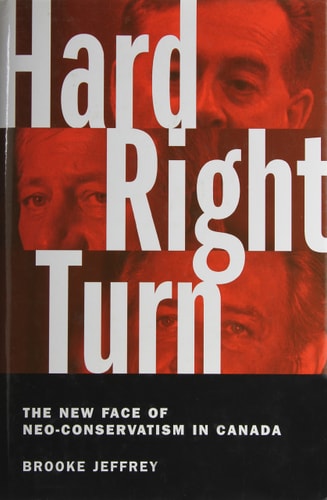
Hard Right Turn
0
0
As an Amazon Associate and affiliate partner, Menrva Books earns from qualifying purchases. Learn more
Author Description
In Ontario, Mike Harris is leading his "Common Sense' revolution. In Alberta, Ralph Klein has taken his right-wing Conservatives to new extremes. In Ottawa, Preston Manning and his Reformers are giving new meaning to the term Official Opposition. Despite their different political labels and regional perspectives, the leaders of the New Right have much in common, including a populist approach to politics and a passionate commitment to the same brand of neo-conservatism -- an ideology previously unknown in Canada and one that runs contrary to our traditional values and beliefs.Jeffrey argues these New Right gladiators are a new breed of politician. Less prepared for public office, they exhibit a dangerous combination of ignorance and zeal, refusing to let facts get in the way of their beliefs. Once in power, their populist mask disappears. Despite their attack on "special interests", they have close links with single-issue interest groups, including pro-life or anti-gun control organizations. And they all believe a government's primary purpose is to satisfy the narrow concerns of those who elected them.What led to their electoral success? Jeffrey places this Canadian phenomenon in an international context, examining such influences as the global corporate agenda. She also explores the Canadian context of western alienation, populism and the emergence of a small but influential neo-conservative intellectual elite whose membership includes such right-wing icons as David Frum and Ted Byfield.Hard-hitting, yet reasoned and detailed in its analysis, Hard Right Turn puts an all-too-human face on the politicians of the New Right.
Menrva's Summary
THE THESIS
This book investigates the rise of neo-conservatism in Canada during the 1990s, questioning how populist political figures successfully challenged traditional Canadian values. Brooke Jeffrey, a political analyst, utilizes a combination of historical context, political theory, and analysis of specific provincial and federal leadership to argue that these figures represent a departure from established governance. She examines the ideological alignment between leaders like Mike Harris, Ralph Klein, and Preston Manning, positing that their success was driven by a specific, narrow-interest agenda rather than broad public consensus.
THE SCOPE MAP
What You Will Find
- Analysis of the political strategies employed by Mike Harris, Ralph Klein, and Preston Manning.
- Examination of the influence of global corporate agendas on domestic Canadian policy.
- Exploration of the role of neo-conservative intellectual elites in shaping public discourse.
- Discussion of the intersection between populist rhetoric and single-issue interest groups.
THE AUTHORITY PERSPECTIVE
The text provides a critical, detailed examination of the Canadian political landscape at the turn of the millennium, focusing on the ideological shifts within the conservative movement. Its analysis suggests a dense, academic approach intended for readers interested in the mechanics of political change and the history of Canadian public policy.
Page Count:
471
Publication Date:
1999-04-19
Publisher:
HarperCollins Publishers
ISBN-10:
0002557622
ISBN-13:
9780002557627
Politics
Canadian History
Government
Conservative Politics
Community Tags
Similar Books