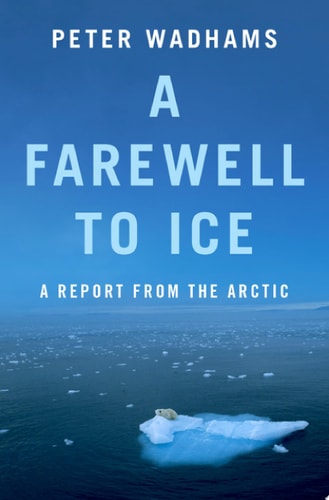
A Farewell to Ice: A Report from the Arctic
0
0
As an Amazon Associate and affiliate partner, Menrva Books earns from qualifying purchases. Learn more
Author Description
Based on five decades of research and observation, a haunting and unsparing look at the melting ice caps, and what their disappearance will mean.Peter Wadhams has been studying ice first-hand since 1970, completing 50 trips to the world's poles and observing for himself the changes over the course of nearly five decades. His conclusions are stark: the ice caps are melting. Following the hottest summer on record, sea ice in September 2016 was the thinnest in recorded history. There is now the probability that within a few years the North Pole will be ice-free for the first time in 10,000 years, entering what some call the "Artic death spiral." As sea ice, as well as land ice on Greenland and Antarctica, continues to melt, the rise in sea levels will devastate coastal communities across the world. The collapse of summer ice in the Artic will release large amounts of methane currently trapped by offshore permafrost. Methane has twenty-three times greater greenhouse warming effect per molecule than CO2; an ice-free arctic summer will therefore have an albedo effect nearly equivalent to that of the last thirty years. A sobering but urgent and engaging book, A Farewell to Ice shows us ice's role on our planet, its history, and the true dimensions of the current global crisis, offering readers concrete advice about what they can do, and what must be done.
Menrva's Summary
THE THESIS
This book investigates the rapid disappearance of Arctic sea ice and the catastrophic global consequences of an ice-free North Pole. Peter Wadhams, a professor of ocean physics with five decades of field research experience, synthesizes his personal observations from fifty polar expeditions with current climate data. He argues that the loss of albedo and the release of methane from permafrost represent a critical tipping point for the Earth's climate system.
THE SCOPE MAP
What You Will Find
- Analysis of sea ice thickness and extent data from 1970 to 2016
- Explanation of the albedo effect and its role in planetary temperature regulation
- Discussion of methane release from sub-sea permafrost
- Projections regarding global sea-level rise and coastal impact
Scope Limits
- The text focuses primarily on Arctic phenomena rather than comprehensive global climate modeling
- It does not provide a detailed policy roadmap for international government intervention
THE AUTHORITY PERSPECTIVE
Experts recognize this work as a significant, firsthand account of polar change from a veteran researcher in the field. Readers frequently note the technical clarity of the prose, which makes complex geophysical processes accessible to a general audience.
Page Count:
240
Publication Date:
2017-01-01
Publisher:
Oxford University Press
ISBN-10:
0190691174
ISBN-13:
9780190691172
History
Science
Nature
Climate Change
Climatic changes
Earth Sciences
Special Topics
Arctic Regions
Arctic Studies
Community Tags
Similar Books