Incentivizing Peace: How International Organizations Can Help Prevent Civil Wars in Member Countries
0
0
As an Amazon Associate and affiliate partner, Menrva Books earns from qualifying purchases. Learn more
Author Description
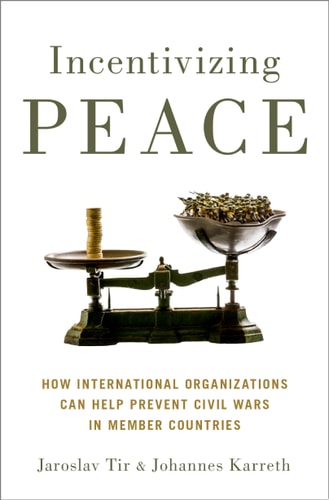
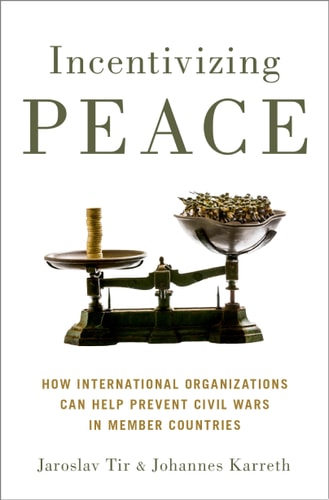
Civil wars are one of the most pressing problems facing the world. Common approaches such as mediation, intervention, and peacekeeping have produced some results in managing ongoing civil wars, but they fall short in preventing civil wars in the first place. This book argues for considering civil wars from a developmental perspective to identify steps to assure that nascent, low-level armed conflicts do not escalate to full-scale civil wars. We show that highly structured intergovernmental organizations (IGOs, e.g. the World Bank or IMF) are particularly well positioned to engage in civil war prevention. Such organizations have both an enduring self-interest in member-state peace and stability and potent (economic) tools to incentivize peaceful conflict resolution. The book advances the hypothesis that countries that belong to a larger number of highly structured IGOs face a significantly lower risk that emerging low-level armed conflicts on their territories will escalate to full-scale civil wars. Systematic analyses of over 260 low-level armed conflicts that have occurred around the globe since World War II provide consistent and robust support for this hypothesis. The impact of a greater number of memberships in highly structured IGOs is substantial, cutting the risk of escalation by over one-half. Case evidence from Indonesia's East Timor conflict, Ivory Coast's post-2010 election crisis, and from the early stages of the conflict in Syria in 2011 provide additional evidence that memberships in highly structured IGOs are indeed key to understanding why some low-level armed conflicts escalate to civil wars and others do not.
Menrva's Summary
THE THESIS
This book investigates how membership in highly structured intergovernmental organizations (IGOs) serves as a mechanism to prevent low-level armed conflicts from escalating into full-scale civil wars. Authors Jaroslav Tir and Johannes Karreth, both established scholars in international relations and conflict studies, utilize a developmental framework to argue that IGOs possess the necessary economic tools and institutional self-interest to incentivize peaceful conflict resolution. By analyzing the structural influence of organizations like the World Bank and the IMF, the authors propose that increased integration into these networks significantly reduces the risk of domestic violence spiraling into protracted civil war.
THE SCOPE MAP
What You Will Find
- A quantitative analysis of over 260 low-level armed conflicts occurring globally since World War II.
- A theoretical framework linking IGO structure to conflict mitigation incentives.
- Comparative case studies including Indonesia, Ivory Coast, and Syria.
Scope Limits
- The study focuses primarily on the preventative capacity of highly structured IGOs rather than the effectiveness of military intervention or peacekeeping in active, high-intensity wars.
THE AUTHORITY PERSPECTIVE
Experts in international relations recognize this work as a rigorous contribution to the study of conflict prevention through institutional mechanisms. Scholars frequently cite the book for its clear methodology and its ability to bridge the gap between developmental economics and security studies.
Page Count:
250
Publication Date:
2018-01-01
Publisher:
Oxford University Press
ISBN-10:
0190699558
ISBN-13:
9780190699550
Economics
Conflict Resolution
Peace studies
International relations
Community Tags
Other Editions(2)
Similar Books









Reader Comments
Share Your Thoughts
No comments yet. Be the first to share your thoughts!