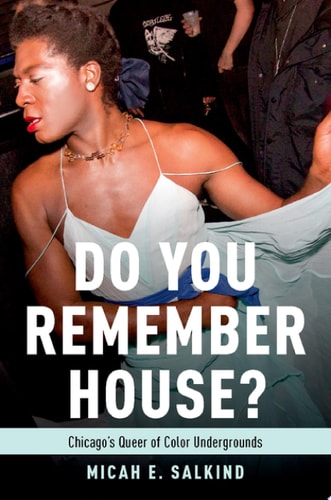
Do You Remember House?: Chicago's Queer of Color Undergrounds
0
0
As an Amazon Associate and affiliate partner, Menrva Books earns from qualifying purchases. Learn more
Author Description
Today, no matter where you are in the world, you can turn on a radio and hear the echoes and influences of Chicago house music. Do You Remember House? tells a comprehensive story of the emergence, and contemporary memorialization of house in Chicago, tracing the development of Chicago house music culture from its beginnings in the late '70s to the present. Based on expansive research in archives and his extensive conversations with the makers of house in Chicago's parks, clubs, museums, and dance studios, author Micah Salkind argues that the remediation and adaptation of house music by crossover communities in its first decade shaped the ways that Chicago producers, DJs, dancers, and promoters today re-remember and mobilize the genre as an archive of collectivity and congregation. The book's engagement with musical, kinesthetic, and visual aspects of house music culture builds from a tradition of queer of color critique. As such, Do You Remember House? considers house music's liberatory potential in terms of its genre-defiant repertoire in motion. Ultimately, the book argues that even as house music culture has been appropriated and exploited, the music's porosity and flexibility have allowed it to remain what pioneering Chicago DJ Craig Cannon calls a "musical Stonewall" for queers and people of color in the Windy City and around the world.
Menrva's Summary
THE THESIS
This book investigates how the origins and evolution of Chicago house music function as a critical archive of queer of color resistance and community formation. Author Micah Salkind, a scholar of music and culture, utilizes extensive archival research and primary source interviews with DJs, dancers, and producers to construct his argument. He posits that the genre's inherent flexibility and porosity allowed it to serve as a vital space for marginalized groups to congregate and mobilize against social exclusion. By analyzing the music through the lens of queer of color critique, Salkind demonstrates how the genre remains a potent symbol of liberation.
THE SCOPE MAP
What You Will Find
- Historical development of Chicago house music from the late 1970s to the present day.
- Analysis of the musical, kinesthetic, and visual components of house culture.
- Theoretical framework based on queer of color critique and archival studies.
Scope Limits
- The text focuses primarily on the Chicago-based underground scene rather than a global history of house music.
- It does not provide a technical manual for music production or DJing techniques.
THE AUTHORITY PERSPECTIVE
Scholars and music historians recognize this work as a significant contribution to the study of electronic music and urban subcultures. Readers frequently note the academic rigor of the prose, which effectively bridges the gap between musicology and social history.
Page Count:
350
Publication Date:
2018-01-01
Publisher:
Oxford University Press
ISBN-10:
0190698446
ISBN-13:
9780190698447
Chicago History
Sociology
Dance
Music History
Music american
House Music
LGBTQ Studies
Humanities
Community Tags
Similar Books