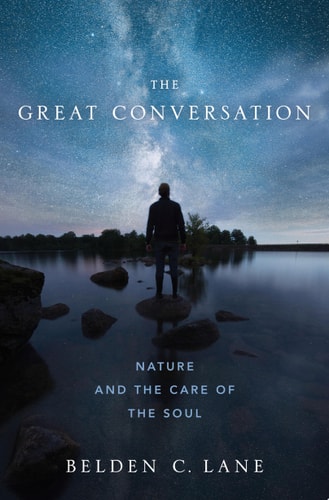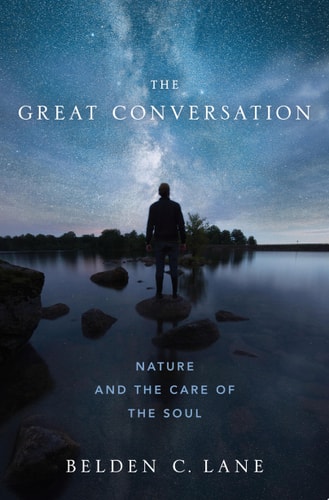
The Great Conversation: Nature and the Care of the Soul
0
0
As an Amazon Associate and affiliate partner, Menrva Books earns from qualifying purchases. Learn more
Author Description
"We are surrounded by a world that talks, but we don't listen. We are part of a community engaged in a vast conversation, but we deny our role in it."In the face of climate change, species loss, and vast environmental destruction, the ability to stand in the flow of the great conversation of all creatures and the earth can feel utterly lost to the human race. But Belden C. Lane suggests that it can and must be recovered, not only for the sake of endangered species and the well-being of at-risk communities, but for the survival of the world itself. The Great Conversation is Lane's multi-faceted treatise on a spiritually centered environmentalism. At the core is a belief in the power of the natural world to act as teacher. In a series of personal anecdotes, Lane pairs his own experiences in the wild with the writings of saints and sages from a wide range of religious traditions. A night in a Missourian cave brings to mind the Spiritual Exercises of Ignatius of Loyola; the canyons of southern Utah elicit a response from the Chinese philosopher Laozi; 500,000 migrating sandhill cranes rest in Nebraska and evoke the Sufi poet Farid ud-Din Attar. With each chapter, the humility of spiritual masters through the ages melds with the author's encounters with natural teachers to offer guidance for entering once more into a conversation with the world.
Menrva's Summary
THE THESIS
Belden C. Lane investigates the critical necessity of recovering a reciprocal, spiritual relationship with the natural world to address the modern environmental crisis. Drawing on his background as a scholar of religion and his personal experiences in wilderness settings, Lane argues that the earth functions as a primary teacher. He synthesizes ecological concerns with the wisdom of diverse spiritual traditions to propose a model of environmentalism rooted in humility and attentive listening.
THE SCOPE MAP
What You Will Find
- Comparative analysis of religious texts from Christian, Taoist, and Sufi traditions
- Personal narrative accounts of wilderness encounters in diverse North American landscapes
- A framework for integrating spiritual practice with environmental stewardship
Scope Limits
- The text does not provide technical scientific data on climate change or specific policy recommendations for environmental legislation.
THE AUTHORITY PERSPECTIVE
Readers and scholars frequently note the accessible, meditative quality of the prose, which bridges the gap between academic theology and nature writing. Experts highlight this as a significant contribution to the field of ecotheology for those seeking a spiritual dimension to environmental ethics.
Page Count:
343
Publication Date:
2019-01-01
Publisher:
Oxford University Press
ISBN-10:
0190842695
ISBN-13:
9780190842697
Nature
Spirituality
Religion
Philosophy
Religious Aspects
Bibles
Inspirational
Ecology
Community Tags
Similar Books