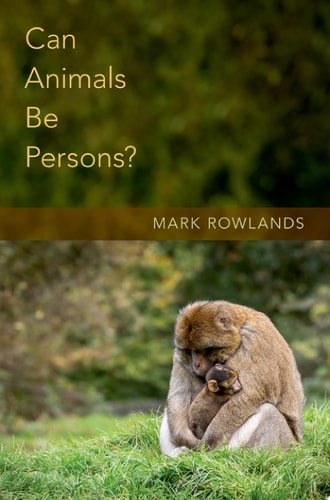
Can Animals Be Persons?
0
0
As an Amazon Associate and affiliate partner, Menrva Books earns from qualifying purchases. Learn more
Author Description
Can animals be persons? To this question, scientific and philosophical consensus has taken the form of a resounding, 'No!' In this book, Mark Rowlands disagrees. Not only can animals be persons, many of them probably are. Taking, as his starting point, John Locke's classic definition of a person, as "a thinking intelligent being, that has reason and reflection, and can consider itself the same thinking thing, in different times and places," Rowlands argues that many animals can satisfy all of these conditions. A person is an individual in which four features coalesce: consciousness, rationality, self-awareness and other-awareness, and many animals are such individuals. Consciousness--something that is like to have an experience--is widely distributed through the animal kingdom. Many animals are capable of both causal and logical reasoning. Many animals are also self-aware, since a form of self-awareness is essentially built into the possession of conscious experience. And some animals are capable of a kind of awareness of the minds of others, quite independently of whether they possess a theory of mind. This is not just a book about animals, however. As well as being fascinating in their own right, animals, as Claude Levi-Strauss once put it, are "good to think." In this seamless interweaving of the empirical study of animal minds with philosophy and its history, this book makes a powerful case for the idea that reflection on animals allows us to better understand each of these four pillars of personhood, and so illuminates what means for any individual--animal or human--to be conscious, rational, self- and other-aware.
Menrva's Summary
THE THESIS
This book investigates whether animals possess the cognitive and psychological attributes required to be classified as persons. Mark Rowlands, a professor of philosophy, challenges the traditional consensus that personhood is an exclusively human trait. By re-evaluating John Locke's classic definition of a person, Rowlands constructs an argument that consciousness, rationality, self-awareness, and other-awareness are present in many non-human animals. The text synthesizes empirical research from animal behavior studies with historical philosophical frameworks to redefine the boundaries of moral and cognitive status.
THE SCOPE MAP
What You Will Find
- A re-examination of John Locke's definition of personhood
- Analysis of four pillars: consciousness, rationality, self-awareness, and other-awareness
- Integration of empirical animal behavior studies with philosophical inquiry
Scope Limits
- The book does not provide a legal framework for animal rights legislation
- It does not cover every species in the animal kingdom, focusing instead on general cognitive capacities
THE AUTHORITY PERSPECTIVE
Experts and readers frequently note the accessible yet rigorous nature of the prose, which bridges the gap between academic philosophy and animal science. The text is often cited as a significant contribution to the ongoing debate regarding the moral status of non-human animals.
Page Count:
227
Publication Date:
2019-01-01
Publisher:
Oxford University Press
ISBN-10:
0190846054
ISBN-13:
9780190846053
History
Non-Fiction
Philosophy
Animal Rights
Animal Ethics
Community Tags
Similar Books