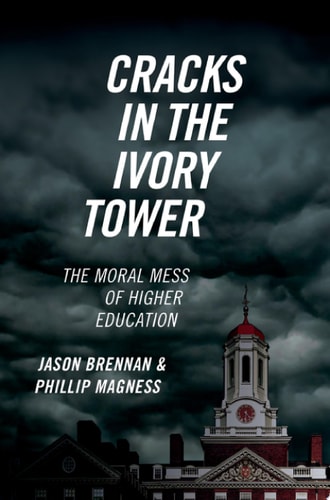
Cracks in the Ivory Tower
0
0
As an Amazon Associate and affiliate partner, Menrva Books earns from qualifying purchases. Learn more
Author Description
Academics Extol High-minded Ideals, Such As Serving The Common Good And Promoting Social Justice. Universities Aim To Be Centers Of Learning That Find The Best And Brightest Students, Treat Them Fairly, And Equip Them With The Knowledge They Need To Lead Better Lives. But As Jason Brennan And Phillip Magness Show In Cracks In The Ivory Tower, American Universities Fall Far Short Of This Ideal. At Almost Every Level, They Find That Students, Professors, And Administrators Are Guided By Self-interest Rather Than Ethical Concerns. College Bureaucratic Structures Also Often Incentivize And Reward Bad Behavior, While Disincentivizing And Even Punishing Good Behavior. Most Students, Faculty, And Administrators Are Out To Serve Themselves And Pass Their Costs Onto Others. The Problems Are Deep And Pervasive: Most Academic Marketing And Advertising Is Semi-fraudulent. To Justify Their Own Pay Raises And Higher Budgets, Administrators Hire Expensive And Unnecessary Staff. Faculty Exploit Students For Tuition Dollars Through Gen-ed Requirements. Students Hardly Learn Anything And Cheating Is Pervasive. At Every Level, Academics Disguise Their Pursuit Of Self-interest With High-faluting Moral Language. Marshaling An Array Of Data, Brennan And Magness Expose Many Of The Ethical Failings Of Academia And In Turn Reshape Our Understanding Of How Such High Power Institutions Run Their Business. Everyone Knows Academia Is Dysfunctional. Brennan And Magness Show The Problems Are Worse Than Anyone Realized. Academics Have Only Themselves To Blame.
Menrva's Summary
THE THESIS
This book investigates the systemic ethical failures and self-interested behaviors that undermine the stated mission of modern American universities. Authors Jason Brennan and Phillip W. Magness, both established scholars in political economy and history, utilize institutional analysis and economic data to argue that academic structures incentivize inefficiency and exploitation. They contend that the gap between the idealistic rhetoric of higher education and the reality of its administrative and pedagogical practices is a result of misaligned incentives rather than individual moral failings.
THE SCOPE MAP
What You Will Find
- Analysis of administrative bloat and unnecessary staffing practices
- Examination of the economic incentives behind general education requirements
- Critique of academic marketing and student assessment standards
- Data-driven assessment of institutional self-interest
Scope Limits
- The text does not provide a comprehensive history of the development of the university system
- It does not offer a detailed roadmap for legislative reform or policy implementation
THE AUTHORITY PERSPECTIVE
Critics and readers often note the provocative and critical tone of the authors, which challenges conventional views of academic institutions. Experts frequently highlight the book as a significant contribution to the literature on institutional economics and the critique of higher education administration.
Page Count:
272
Publication Date:
2019-01-01
Publisher:
Oxford University Press
ISBN-10:
0190846291
ISBN-13:
9780190846299
Economics
Non-Fiction
Education
Moral and ethical aspects
Education higher
Universities And Colleges
Sociology
Public Policy
Higher Education
Community Tags
Similar Books