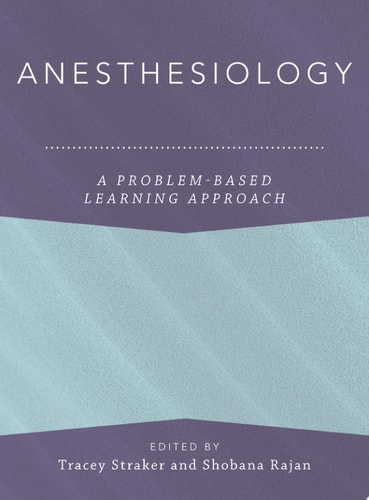
Anesthesiology: A Problem-Based Learning Approach
0
0
As an Amazon Associate and affiliate partner, Menrva Books earns from qualifying purchases. Learn more
Author Description
Linking existing knowledge to new knowledge by presenting it in the form of a case or a problem is a popular and effective educational approach resulting in better retention of the knowledge and improved ability to apply that knowledge to solve real problems. This problem-based learning (PBL) method was introduced into medical education at McMaster University in Ontario, Canada, in 1969. Since then it has been widely incorporated into secondary, undergraduate, and graduate education in a variety of disciplines worldwide.This new volume for the Anesthesiology Problem-Based Learning series reviews topics in general anesthesiology utilizing the PBL approach. Each chapter deals with conditions and problems in anesthesia practice presented as a case stem with questions to encourage critical thinking, followed by an evidence-based discussion and multiple-choice questions for self-assessment. Current in its knowledge of organ systems and management, the text keeps pace with new technology, new drugs, and new surgical techniques coupled with current guidelines for anesthetic management. Cases highlight the practical issues that arise in the operating room and offers solutions for them.The book can be used to review an upcoming clinical case or as a PBL tool. The 'Stem Case' and 'Key Questions and Discussion' sections can serve as the basis for interactive learning experiences for study groups or as a broad yet in-depth clinical review of the specialty for the individual learner. Self-assessment questions can be used as a measure of knowledge acquisition or simply as a question bank to prepare for examinations.
Menrva's Summary
THE THESIS
How can the problem-based learning (PBL) methodology be effectively applied to improve clinical decision-making and knowledge retention in the field of anesthesiology? Magdalena Anitescu utilizes the pedagogical framework of case-based inquiry to bridge the gap between theoretical knowledge and practical application. By presenting clinical scenarios that mirror real-world operating room challenges, the text encourages practitioners to synthesize information regarding organ systems, pharmacology, and surgical techniques. The work serves as both a study tool for individual learners and a structured resource for interactive group education.
THE SCOPE MAP
What You Will Find
- Case stems covering a broad range of general anesthesiology topics
- Evidence-based discussions following each clinical scenario
- Multiple-choice questions for self-assessment and examination preparation
- Integration of current guidelines, new drugs, and emerging surgical technologies
Scope Limits
- The text focuses primarily on general anesthesiology and may not cover highly specialized sub-disciplines in exhaustive detail
- It is designed as a clinical review tool rather than a comprehensive encyclopedic reference for basic science
THE AUTHORITY PERSPECTIVE
Medical educators and practitioners frequently cite this volume as a practical resource for bridging the gap between academic theory and clinical reality. Experts highlight the text's utility in both individual board preparation and as a structured framework for interactive departmental study groups.
Page Count:
480
Publication Date:
2018-12-13
Publisher:
Oxford University Press
ISBN-10:
0190850698
ISBN-13:
9780190850692
Education
Reference
Medical
Anesthesiology
Community Tags
Similar Books