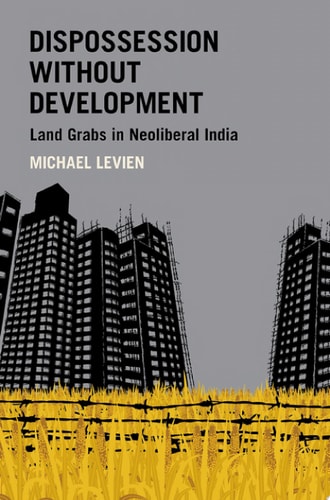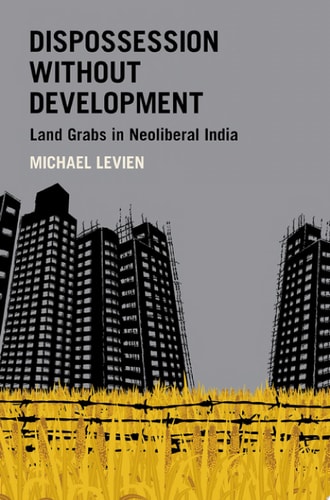
Dispossession Without Development
0
0
As an Amazon Associate and affiliate partner, Menrva Books earns from qualifying purchases. Learn more
Author Description
Since The Mid-2000s, India Has Been Beset By Widespread Farmer Protests Against Land Dispossession. Dispossession Without Development Demonstrates That Beneath These Conflicts Lay A Profound Shift In Regimes Of Dispossession. While The Postcolonial Indian State Dispossessed Land Mostly For Public-sector Industry And Infrastructure, Since The 1990s State Governments Have Become Land Brokers For Private Real Estate Capital. Using The Case Of A Village In Rajasthan That Was Dispossessed For A Private Special Economic Zone, The Book Ethnographically Illustrates The Exclusionary Trajectory Of Capitalism Driving Dispossession In Contemporary India. Taking Us Into The Lives Of Diverse Villagers In Rajpura, The Book Meticulously Documents The Destruction Of Agricultural Livelihoods, The Marginalization Of Rural Labor, The Spatial Uneveness Of Infrastructure Provision, And The Dramatic Consequences Of Real Estate Speculation For Social Inequality And Village Politics. Illuminating The Structural Underpinnings Of Land Struggles In Contemporary India, This Book Will Resonate In Any Place Where Land Grabs Have Fueled Conflict In Recent Years.
Menrva's Summary
THE THESIS
This book investigates how the shift from public-sector land acquisition to private real estate speculation has fundamentally altered the nature of dispossession in contemporary India. Michael Levien, a sociologist specializing in development and agrarian change, utilizes a longitudinal ethnographic study of a village in Rajasthan to challenge existing theories of development. He argues that the current regime of dispossession serves private capital at the expense of rural livelihoods, creating a cycle of exclusion rather than economic growth.
THE SCOPE MAP
What You Will Find
- A detailed ethnographic analysis of the village of Rajpura.
- A comparative framework contrasting postcolonial state-led industrialization with modern private real estate development.
- Documentation of the socioeconomic impacts of Special Economic Zones on rural labor and social stratification.
Scope Limits
- The study focuses primarily on the specific case of Rajpura, Rajasthan, and does not provide an exhaustive survey of every state in India.
- The analysis is limited to the period following the 1990s economic liberalization.
THE AUTHORITY PERSPECTIVE
Scholars in the fields of political economy and development studies recognize this work as a rigorous contribution to the understanding of land conflict in the Global South. Readers frequently note the academic density of the prose and the depth of the ethnographic research provided by the author.
Page Count:
352
Publication Date:
2018-01-01
Publisher:
Oxford University Press
ISBN-10:
0190859172
ISBN-13:
9780190859176
Sociology
India
Land Rights
Capitalism
Community Tags
Similar Books