Right to Mourn
0
0
As an Amazon Associate and affiliate partner, Menrva Books earns from qualifying purchases. Learn more
Author Description
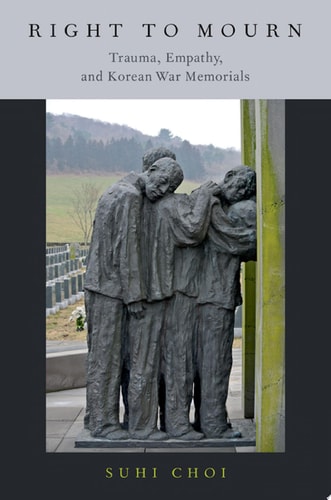
In The Highly Politicized Memory Space Of Postwar South Korea, Many Families Have Been Deprived Of Their Right To Mourn Loved Ones Lost In The Korean War. Only Since The 1990s Has The Government Begun To Acknowledge The Atrocities Committed By South Korean And American Troops That Resulted In Large Numbers Of Civilian Casualties. The Truth And Reconciliation Committee, New Laws Honoring Victims, And Construction Of Monuments And Memorials Have Finally Opened Public Spaces For Mourning. In Right To Mourn, Suhi Choi Explores This New Context Of Remembering In Which Memories That Have Long Been Private Are Brought Into Official Sites. As The Generation That Once Carried These Memories Fades Away, Choi Poses An Increasingly Critical Question: Can A Memorial Communicate Trauma And Facilitate Mourning? Through Careful Examination Of Recently Built Korean War Memorials (the Jeju April 3 Peace Park, The Memorial For The Gurye Victims Of Yosun Killings, And The No Gun Ri Peace Park), Right To Mourn Provokes Readers To Look At The Nearly Seven-decade-old War Within The Most Updated Context, And Shows How Suppressed Trauma Manifests At The Transient Interactions Among Bodies, Objects, And Rituals At The Sites Of These Memorials.
Menrva's Summary
THE THESIS
Can state-sanctioned memorials effectively communicate historical trauma and facilitate the mourning process for victims of the Korean War? Suhi Choi, a scholar specializing in communication and memory, investigates the transition of private, suppressed memories into the public sphere in South Korea. By analyzing the intersection of government policy, ritual, and physical space, she argues that the act of memorialization is a complex, ongoing negotiation between official narratives and the lived experiences of survivors.
THE SCOPE MAP
What You Will Find
- Analysis of three specific sites: Jeju April 3 Peace Park, the Memorial for the Gurye victims of Yosun killings, and the No Gun Ri Peace Park.
- Examination of the Truth and Reconciliation Committee and related legislative efforts in South Korea.
- Theoretical framework regarding the interaction between human bodies, physical objects, and ritualized performance at memorial sites.
Scope Limits
- The study does not provide a comprehensive military history of the Korean War.
- The analysis focuses primarily on South Korean domestic memory politics rather than international diplomatic relations.
THE AUTHORITY PERSPECTIVE
Scholars in memory studies and Asian history identify this work as a significant contribution to understanding how post-conflict societies navigate the transition from state-enforced silence to public commemoration. Readers frequently note the academic density of the prose, which effectively bridges the gap between communication theory and historical analysis.
Page Count:
224
Publication Date:
2019-01-01
Publisher:
Oxford University Press
ISBN-10:
0190855258
ISBN-13:
9780190855253
History
Sociology
Memory Studies
Korean War
Community Tags
Similar Books