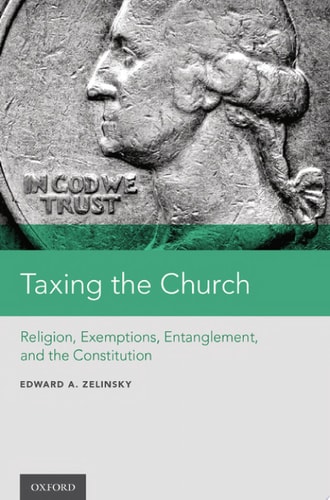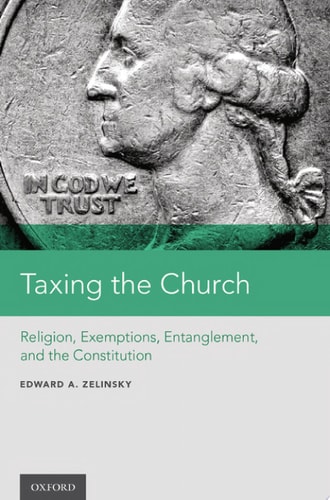
Taxing the Church
0
0
As an Amazon Associate and affiliate partner, Menrva Books earns from qualifying purchases. Learn more
Author Description
This Book Explores The Taxation And Exemption Of Churches And Other Religious Institutions, Both Empirically And Normatively. This Exploration Reveals That Churches And Other Religious Institutions Are Treated Diversely By The Federal And State Tax Systems. Sectarian Institutions Pay More Tax Than Many Believe. In Important Respects, The States Differ Among Themselves In Their Respective Approaches To The Taxation Of Sectarian Entities. Either Taxing Or Exempting Churches And Other Sectarian Entities Entangles Church And State. The Taxes To Which Churches Are More Frequently Subject - Federal Social Security And Medicare Taxes, Sales Taxes, Real Estate Conveyance Taxes - Fall On The Less Entangling End Of The Spectrum. The Taxes From Which Religious Institutions Are Exempt - General Income Taxes, Value-based Property Taxes, Unemployment Taxes - Are Typically Taxes With The Greatest Potential For Church-state Enforcement Entanglement. It Is Unpersuasive To Reflexively Denounce The Tax Exemption Of Religious Actors And Institutions As A Subsidy. Tax Exemption Can Implement The Secular, Non-subsidizing Goal Of Minimizing Church-state Enforcement Entanglement And Thus Be Regarded As Part Of A Normative Tax Base. Taxing The Church Or Exempting The Church Involves Often Difficult Trade-offs Among Competing And Legitimate Values. On Balance, Our Federal System Of Decentralized Legislation Reasonably Make These Legal And Tax Policy Trade-offs, Though There Is Room For Improvement In Particular Settings Such As The Protection Of Internal Church Communications And The Expansion Of The Churches' Sales Tax Liabilities.
Menrva's Summary
THE THESIS
This book investigates the complex legal and normative justifications for the taxation and tax-exempt status of religious institutions within the United States. Edward A. Zelinsky, a professor of law, utilizes a comparative analysis of federal and state tax codes to argue that the current system is not a simple subsidy but a nuanced balancing act between competing values. He posits that tax exemptions often serve the secular purpose of minimizing government entanglement in religious affairs, challenging the reflexive view that such exemptions are inherently problematic.
THE SCOPE MAP
What You Will Find
- Analysis of federal Social Security, Medicare, and sales tax liabilities for religious entities.
- Examination of state-level variations in property and income tax exemptions.
- A normative framework for evaluating church-state entanglement in tax enforcement.
Scope Limits
- The book does not provide a comprehensive historical survey of religious tax exemptions prior to the modern federal tax era.
- It does not offer a definitive legislative proposal for a uniform national tax policy regarding religious institutions.
THE AUTHORITY PERSPECTIVE
Legal scholars and tax policy experts frequently cite this work for its balanced approach to a contentious constitutional issue. Readers often note the academic density of the prose, which requires a foundational understanding of tax law and First Amendment jurisprudence to fully appreciate the author's arguments.
Page Count:
272
Publication Date:
2017-01-01
Publisher:
Oxford University Press
ISBN-10:
0190853964
ISBN-13:
9780190853969
Religion
Constitutional Law
Public Policy
Law
Taxation
Community Tags
Similar Books