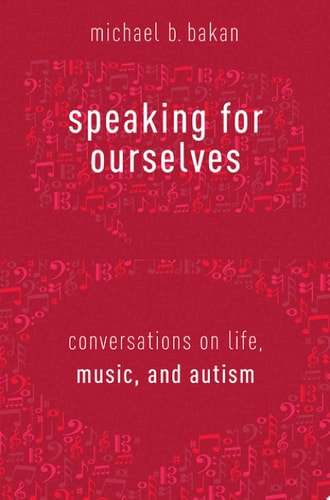
Speaking for Ourselves: Conversations on Life, Music, and Autism
0
0
As an Amazon Associate and affiliate partner, Menrva Books earns from qualifying purchases. Learn more
Author Description
Since the advent of autism as a diagnosed condition in the 1940s, the importance of music in the lives of autistic people has been widely observed and studied. Articles on musical savants, extraordinary feats of musical memory, unusually high rates of absolute or "perfect" pitch, and the effectiveness of music-based therapies abound in the autism literature. Meanwhile, music scholars and historians have posited autism-centered explanatory models to account for the unique musical artistry of everyone from Béla Bartók and Glenn Gould to "Blind Tom" Wiggins.Given the great deal of attention paid to music and autism, it is surprising to discover that autistic people have rarely been asked to account for how they themselves make and experience music or why it matters to them that they do. In Speaking for Ourselves, renowned ethnomusicologist Michael Bakan does just that, engaging in deep conversations--some spanning the course of years--with ten fascinating and very different individuals who share two basic things in common: an autism spectrum diagnosis and a life in which music plays a central part. These conversations offer profound insights into the intricacies and intersections of music, autism, neurodiversity, and life in general, not from an autistic point of view, but rather from many different autistic points of view. They invite readers to partake of a rich tapestry of words, ideas, images, and musical sounds that speak to both the diversity of autistic experience and the common humanity we all share.
Menrva's Summary
THE THESIS
This book investigates the lived experiences of autistic individuals regarding their personal engagement with music, challenging the historical tendency to study autism through a purely clinical or external lens. Michael B. Bakan, a renowned ethnomusicologist, utilizes a qualitative research framework to facilitate deep, longitudinal conversations with ten autistic individuals. By shifting the focus from external observation to self-reporting, the author constructs a nuanced understanding of how music functions as a central component of identity, communication, and sensory processing within the neurodivergent community.
THE SCOPE MAP
What You Will Find
- Longitudinal interview data from ten diverse autistic individuals
- Ethnomusicological analysis of personal musical practice
- Perspectives on the intersection of neurodiversity and creative expression
- Qualitative insights into sensory experiences and musical memory
Scope Limits
- Does not provide clinical diagnostic tools or medical advice
- Does not attempt to create a singular, universal theory of autism
- Does not focus on music therapy as a clinical intervention
THE AUTHORITY PERSPECTIVE
Experts in ethnomusicology and disability studies recognize this work as a significant shift toward centering autistic voices in academic discourse. Readers frequently note the accessible yet scholarly tone, which successfully bridges the gap between personal narrative and academic inquiry.
Page Count:
288
Publication Date:
2018-06-08
Publisher:
Oxford University Press
ISBN-10:
0190855835
ISBN-13:
9780190855833
Music
Psychology
Non-Fiction
Sociology
Music
Autism
Musicians
Neurodiversity
Community Tags
Similar Books