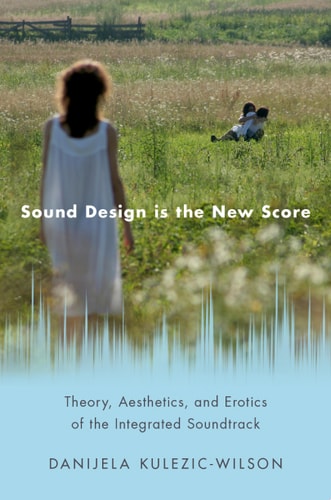
Sound Design Is the New Score: Theory, Aesthetics, and Erotics of the Integrated Soundtrack
0
0
As an Amazon Associate and affiliate partner, Menrva Books earns from qualifying purchases. Learn more
Author Description
The practice of blurring the line between score and sound design has transformed contemporary film soundscape by challenging not only the long-established hierarchical relationships between dialogue, music, and sound effects, but also the modes of perception shaped by classical soundtrack practices. The methods of this new trend rely on the language of contemporary popular and art music, producing soundtracks in which it is difficult to tell the difference between score and ambient sound, where pieces of electroacoustic music are merged with diegetic sound, sound effects are absorbed into the score or treated as music, and diegetic sound is treated as musique concrète. In Sound Design Is the New Score, Kulezic-Wilson explores theoretical, aesthetic, and sensuous dimensions of this new trend, providing a multifaceted portrait of a practice which recognizes the interconnectedness of all soundtrack elements and emphasizes their inherent musicality. The aesthetic concerns of this practice are illuminated through the concept of the aesthetics of reticence which rejects classical narrative and scoring conventions and uses integrated soundtrack strategies to create the space for mystery in art and for individuality in the cinematic experience. The book's emphasis on sensuous and musical aspects of this practice, informed by the feminist discourse on the erotics of art, challenges popular notions about sensory cinema, demonstrating that the sensuousness of film form and its soundscapes is more sophisticated than simply being the result of excessive sensory stimulation facilitated by the use of digital technology or the intensified aesthetics it inspires. The discussion is supported by a wide range of case studies from American independent, Asian, Australian, and European cinemas, including films by Shane Carruth, Claire Denis, Hou Hsiao-hsien, Harmony Korine, David Michôd, Gus Van Sant, and Peter Strickland.
Menrva's Summary
THE THESIS
This book investigates the evolving convergence of musical scores and sound design in contemporary cinema, arguing that the traditional hierarchy between dialogue, music, and sound effects has been fundamentally restructured. Danijela Kulezic-Wilson, a scholar in film music and sound, utilizes a framework that draws upon musicology, film theory, and feminist discourse to analyze how modern soundtracks prioritize a unified, musicalized soundscape. By examining the shift toward integrated audio, the author posits that this trend reflects a move away from classical narrative conventions toward a more sensuous and ambiguous cinematic experience.
THE SCOPE MAP
What You Will Find
- Analysis of the 'aesthetics of reticence' in modern film sound.
- Theoretical exploration of the erotics of art applied to cinematic soundscapes.
- Case studies from diverse global cinemas including works by Claire Denis, Shane Carruth, and Hou Hsiao-hsien.
- Examination of the blurring boundaries between diegetic sound, musique concrète, and electroacoustic music.
Scope Limits
- The text does not provide a technical 'how-to' manual for sound engineers or software-specific production tutorials.
- The analysis focuses primarily on art-house and independent cinema rather than mainstream blockbuster sound mixing practices.
THE AUTHORITY PERSPECTIVE
Scholars and film critics recognize this work as a significant contribution to the study of cinematic sound, particularly for its focus on the musicality of non-musical sound elements. Readers frequently note the academic density of the prose, which makes it a specialized text for students and researchers in film and media studies.
Page Count:
0
Publication Date:
1900-01-01
Publisher:
Oxford University Press,
ISBN-10:
0190855355
ISBN-13:
9780190855352
Sounddesign
Media Studies
Music theory
Sound design
Art Theory
Film Studies
Ästhetik
Criticism history
Sound
Cinematic Aesthetics
Filmmusik
Community Tags
Similar Books