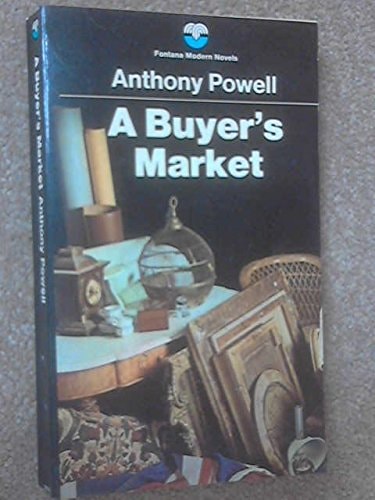
Buyer's Market
0
0
As an Amazon Associate and affiliate partner, Menrva Books earns from qualifying purchases. Learn more
Author Description
In this second volume of the series "A Dance to the Music of Time,"we see [Nicholas Jenkins] entering the ballrooms of high society while also discovering the London demimonde of the late 1920s... Nearly the entire first half of the novel is dedicated to a single evening, where Jenkins describes the participants of a dinner, a dance and a seedy part in exhaustive detail. Here we see more clearly than the first novel Powell's conception of his social circle over the decades as a dance. Stringham and Widmerpool, among other characters from the first novel, enter Jenkins' life again after a gap of several years, but no sooner do they show up than they are cast away by new fates. With Jenkins' greater maturity comes a recognition of more important societal concerns in 1920s England. One character's awkwardly closeted homosexuality creates complications for Jenkins' circle, as does the need for a young female character to procure an abortion when it was seriously illegal. By the end of the novel, Jenkins has even entered among political radicals...
Menrva's Summary
THE PULSE
As Nicholas Jenkins navigates the shifting social hierarchies of 1920s London, he finds his personal connections increasingly dictated by the unpredictable rhythms of class and fate. Jenkins observes the intricate maneuvers of his peers during a singular, extended evening of social engagements, which serves as the catalyst for his deeper immersion into both high society and the city's darker corners. He attempts to maintain his own sense of detachment while the lives of his acquaintances, including the enigmatic Stringham and the ambitious Widmerpool, collide and diverge under the pressures of societal expectation. The narrative, presented through Jenkins' reflective first-person perspective, captures the transition from youthful observation to a more mature, albeit cynical, understanding of the rigid structures governing his world.
INSIDE THE PAGES
- Detailed, observational prose focusing on the minutiae of social etiquette and dinner party dynamics.
- A non-linear, episodic structure that emphasizes the passage of time and the cyclical nature of social circles.
- Exploration of the tension between individual desire and the restrictive moral codes of 1920s England.
- Integration of complex, recurring characters whose trajectories are shaped by external societal forces.
- A focus on the contrast between the polished ballrooms of the elite and the clandestine activities of the London demimonde.
- Thematic examination of political radicalization and its impact on traditional social structures.
- Use of irony to highlight the absurdity of class-based social climbing and personal ambition.
- A deliberate, measured pacing that mimics the slow, formal movements of a dance.
THE COLLECTIVE ECHO
This novel is widely regarded as a pivotal installment in the broader sequence, noted for its masterful control of tone and its sharp, analytical gaze on the British upper-middle class. Critics frequently highlight the author's ability to transform a single evening into a profound study of character evolution and social decay. Readers often appreciate the balance between the dry, observational humor and the more somber, underlying themes of personal entrapment. The work is consistently praised for its stylistic precision and its success in capturing the specific atmosphere of the interwar period without resorting to melodrama.
Page Count:
288
Publication Date:
1952-01-01
Publisher:
Fontana, Collins
ISBN-10:
0006116272
ISBN-13:
9780006116271
Historical Fiction
Classic Literature
Contemporary
Literature & Fiction
Social Satire
20th Century
British literature
Community Tags
Similar Books