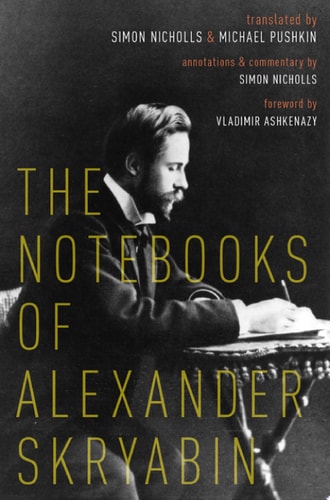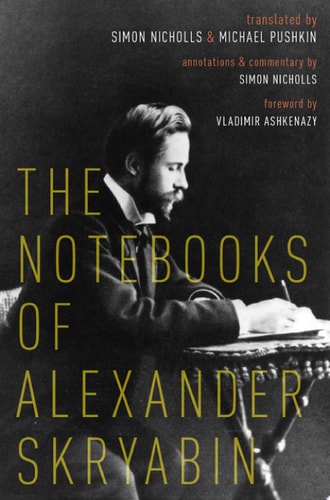
The Notebooks of Alexander Skryabin
0
0
As an Amazon Associate and affiliate partner, Menrva Books earns from qualifying purchases. Learn more
Author Description
Russian composer Alexander Skryabin's life spanned the late romantic era and the momentous early years of the twentieth century, but was cut short before the end of the first world war. In a predominantly conservative era in the Russian musical scene, he drew inspiration from poets, philosophers, and dramatists of the Silver Age, a period of radical artistic renewal in Russia. Possessed by an apocalyptic vision of transformation, aspects of which he shared with other Russian thinkers and artists of the period, Skryabin transformed his musical language from a ripe Romantic style into a far-reaching, radical instrument for the expression of his ideas.This newly translated collection of the composer's writings and letters allows readers to experience and understand Skryabin's worldview, personality, and life as never before. The Notebooks of Alexander Skryabin features commentary based on original materials and accounts by the composer's friends and associates, dispelling popular misconceptions about his life and revealing the dazzling constellation of philosophies that comprised his world of ideas, from Ancient Greek and German Idealist philosophy to the writings of Nietzsche, and Indian culture to the Theosophical writings of H. P. Blavatsky. Close textual readings and new biographical insights converge to present a vivid impression of Skryabin's thought and its impact on his musical compositions.
Menrva's Summary
THE THESIS
This volume investigates the intellectual and philosophical foundations of Alexander Skryabin’s musical evolution by analyzing his personal writings and correspondence. Michael Pushkin utilizes a collection of newly translated primary source documents, including letters and notebooks, to reconstruct the composer's worldview. The author argues that Skryabin’s transition from Romanticism to radical modernism was driven by a specific synthesis of Silver Age Russian thought, German Idealism, and Theosophy. By integrating biographical context with textual analysis, the work seeks to clarify the relationship between the composer's metaphysical beliefs and his innovative musical language.
THE SCOPE MAP
What You Will Find
- A curated collection of translated letters and private notebooks from Alexander Skryabin.
- Analysis of the influence of Nietzsche, H. P. Blavatsky, and Ancient Greek philosophy on musical composition.
- Biographical commentary derived from accounts by the composer's contemporaries.
Scope Limits
- The text does not provide a comprehensive musicological breakdown of every individual score or technical composition.
- It does not cover the post-1915 period extensively due to the composer's premature death.
THE AUTHORITY PERSPECTIVE
Scholars and music historians frequently cite this work as a vital resource for understanding the intersection of early twentieth-century Russian mysticism and musical innovation. Readers often note the academic density of the prose, which provides a rigorous examination of the composer's complex ideological framework.
Page Count:
288
Publication Date:
2018-05-14
Publisher:
Oxford University Press
ISBN-10:
0190863668
ISBN-13:
9780190863661
Philosophy
Non-Fiction
Biography
Music History
Russian History
Community Tags
Similar Books