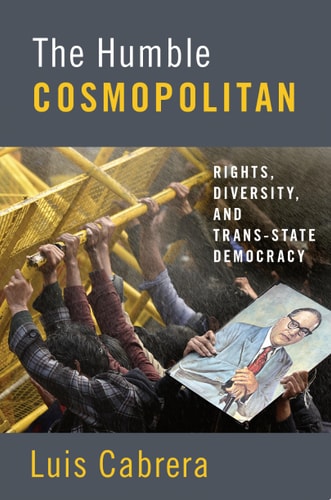
The Humble Cosmopolitan: Rights, Diversity, and Trans-state Democracy
0
0
As an Amazon Associate and affiliate partner, Menrva Books earns from qualifying purchases. Learn more
Author Description
Is a strong cosmopolitan stance irretrievably arrogant? Cosmopolitanism, which affirms universal moral principles and grants no fundamental moral significance to the state, has become increasingly central to normative political theory. Yet, it has faced persistent claims that it disdains local attachments and cultures, while also seeking the neo-imperialistic imposition of Western moral views on all persons. The critique is said to apply with even greater force to institutional cosmopolitan approaches, which seek the development of global political institutions capable of promoting global aims for human rights, democracy, etc. This book works to address such objections through developing a novel theory of cosmopolitan political humility. It draws on the work of Indian constitutional architect and social activist B.R. Ambedkar, who cited universal principles of equality and rights in confronting domestic exclusions and the "arrogance" of caste. He sought to advance forms of political humility, or the recognition of equal standing, and openness to input and challenge within political institutions. This book explores how an "institutional global citizenship" approach to cosmopolitanism could similarly promote political humility globally, by supporting the development of democratic input and challenge mechanisms beyond the state. Such developments would challenge an essential political arrogance identified in the current system, where sovereign states are empowered to simply dismiss rights-based challenges from outsiders or their own populations--even as they serve as the designated guarantors of human rights. The book employs an innovative grounded normative theory method, where extensive original field research informs the development of moral claims. Insights are taken from Dalit activists reaching out to United Nations human rights bodies for support in challenging caste discrimination, and from their critics in the governing Bharatiya Janata Party.
Menrva's Summary
THE THESIS
Can cosmopolitanism be reconciled with local cultural autonomy and democratic legitimacy without descending into neo-imperialistic arrogance? Luis Cabrera, a scholar of political theory, argues that a framework of "cosmopolitan political humility" can address these concerns. By integrating the constitutional philosophy of B.R. Ambedkar with contemporary institutional analysis, the author proposes a model of global citizenship that prioritizes democratic input and accountability mechanisms that transcend the traditional sovereign state.
THE SCOPE MAP
What You Will Find
- A theoretical framework for institutional global citizenship.
- Application of B.R. Ambedkar’s principles of equality and rights to global governance.
- Analysis of the tension between state sovereignty and universal human rights.
- Grounded normative theory methodology using field research.
Scope Limits
- The text does not provide a comprehensive blueprint for a specific global government structure.
- It does not offer an exhaustive history of all cosmopolitan thought, focusing instead on the specific problem of institutional arrogance.
THE AUTHORITY PERSPECTIVE
Scholars in political theory recognize this work as a significant contribution to the debate on global justice and institutional design. Readers frequently note the academic density of the prose and the author's rigorous application of grounded normative theory to complex international relations problems.
Page Count:
368
Publication Date:
2019-01-01
Publisher:
Oxford University Press
ISBN-10:
0190869534
ISBN-13:
9780190869533
Philosophy
Human rights
Political Theory
World citizenship
Democracy
Political and social views
Community Tags
Similar Books