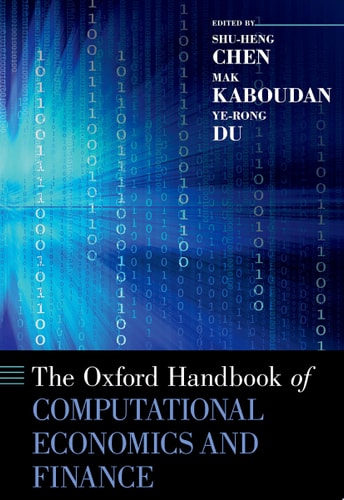
The Oxford Handbook of Computational Economics and Finance (Oxford Handbooks)
0
0
As an Amazon Associate and affiliate partner, Menrva Books earns from qualifying purchases. Learn more
Author Description
The Oxford Handbook of Computational Economics and Finance provides a survey of both the foundations of and recent advances in the frontiers of analysis and action. It is both historically and interdisciplinarily rich and also tightly connected to the rise of digital society. It begins with the conventional view of computational economics, including recent algorithmic development in computing rational expectations, volatility, and general equilibrium. It then moves from traditional computing in economics and finance to recent developments in natural computing, including applications of nature-inspired intelligence, genetic programming, swarm intelligence, and fuzzy logic. Also examined are recent developments of network and agent-based computing in economics. How these approaches are applied is examined in chapters on such subjects as trading robots and automated markets. The last part deals with the epistemology of simulation in its trinity form with the integration of simulation, computation, and dynamics. Distinctive is the focus on natural computationalism and the examination of the implications of intelligent machines for the future of computational economics and finance. Not merely individual robots, but whole integrated systems are extending their "immigration" to the world of Homo sapiens, or symbiogenesis.
Menrva's Summary
THE THESIS
This volume investigates the intersection of computational methodologies and economic theory, specifically addressing how algorithmic advancements and natural computing are reshaping the landscape of financial analysis. The authors, including Mak Kaboudan, Shu-Heng Chen, and YeRong Du, synthesize historical foundations with contemporary developments in digital society. The text argues that the integration of simulation, computation, and dynamics represents a shift toward a new epistemology in economic modeling, moving beyond traditional rational expectations toward agent-based and nature-inspired systems.
THE SCOPE MAP
What You Will Find
- Algorithmic developments in rational expectations, volatility, and general equilibrium
- Applications of natural computing including genetic programming, swarm intelligence, and fuzzy logic
- Analysis of network and agent-based computing in financial markets
- Examination of trading robots and automated market systems
- Epistemological frameworks for simulation and intelligent machine integration
Scope Limits
- Does not provide introductory tutorials for basic programming or fundamental economic theory
- Focuses primarily on advanced computational models rather than empirical historical data analysis
THE AUTHORITY PERSPECTIVE
Experts recognize this handbook as a comprehensive reference for researchers and practitioners working at the intersection of computer science and economics. Readers frequently note the academic density of the prose, which is tailored for those already familiar with quantitative modeling and advanced computational theory.
Page Count:
782
Publication Date:
2018-01-01
Publisher:
Oxford University Press
ISBN-10:
0190877502
ISBN-13:
9780190877507
Economics
Academic
Finance
Macroeconomic Theory
Reference
Community Tags
Similar Books