My Enemy's Enemy: India in Afghanistan from the Soviet Invasion to the US Withdrawal
0
0
As an Amazon Associate and affiliate partner, Menrva Books earns from qualifying purchases. Learn more
Author Description
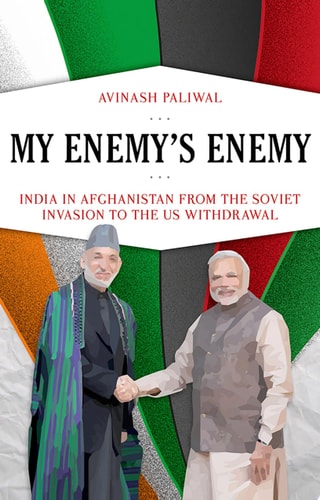
The archetype of 'my enemy's enemy is my friend', India's political and economic presence in Afghanistan is often viewed as a Machiavellian ploy aimed against Pakistan. The first of its kind, this book interrogates that simplistic yet powerful geopolitical narrative and asks what truly drives India's Afghanistan policy. Based on an extensive repertoire of hitherto untapped primary sources including official memoranda, diplomatic correspondence, and a series of interviews with key political actors, My Enemy's Enemy provides a comprehensive analysis of India's strategy debates and foreign policymaking processes vis-à-vis Afghanistan, from the last decade of the Cold War to the 1990s Afghan civil war and the more recent US-led war on terror. It demonstrates that Indian presence in Afghanistan has been guided primarily by an enduring vision for the region that requires a stable balance of power across the Durand Line
Menrva's Summary
THE THESIS
This book investigates the core motivations behind India's foreign policy in Afghanistan, challenging the common perception that these actions are merely a proxy strategy against Pakistan. Author Avinash Paliwal, a researcher specializing in South Asian security, utilizes a vast array of primary sources—including diplomatic memoranda and interviews with key political figures—to construct a detailed analysis of Indian strategic decision-making. He argues that India's engagement is driven by a long-term vision for regional stability rather than simple reactionary maneuvers.
THE SCOPE MAP
What You Will Find
- Analysis of Indian foreign policy from the late Cold War to the US withdrawal.
- Examination of the 1990s Afghan civil war and the post-2001 US-led war on terror.
- Use of previously untapped diplomatic correspondence and official memoranda.
Scope Limits
- The text focuses primarily on the Indian perspective and strategic debates rather than providing a comprehensive history of the internal Afghan conflict.
THE AUTHORITY PERSPECTIVE
Experts recognize this work as a significant contribution to the study of South Asian security, noting its rigorous use of primary source material. Readers frequently highlight the academic density of the prose, which provides a sophisticated look at the complexities of regional power dynamics.
Page Count:
0
Publication Date:
2017-01-01
Publisher:
Hurst
ISBN-10:
019087256X
ISBN-13:
9780190872564
History
Foreign Policy
International relations
Asian Studies
Geopolitics