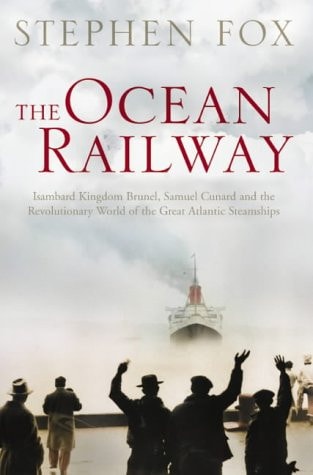
The Ocean Railway: Isambard Kingdom Brunel, Samuel Cunard and the Revolutionary World of the Great Atlantic Steamships
0
0
As an Amazon Associate and affiliate partner, Menrva Books earns from qualifying purchases. Learn more
Author Description
An epic social history of steamship travel from the 19th-century to the 'Lusitania', the 'Mauretania' and the 'Titanic'. The great transatlantic steamships became emblems of an age, of a Victorian audacity of spirit-cathedrals to man's harnessing of new technology. Through the innovations and designs of key engineers and shipping magnates - Samuel Cunard, Isambard Kingdom Brunel and Edward Knights Collins - 'the largest movable objects in human history' were created. To the wealthy, steamships represented glamorous travel, but to most they offered cheap passage out of Europe to the New World. At their peak, steamships delivered one million new Americans each year, transforming the world's oceans from barriers into highways.In this fascinating history, Stephen Fox chronicles the tragedies that marked the evolution of the ocean liner, including the 1852 sinking of the 'Arctic', with the loss of three hundred and twenty-two lives, and the early 20th-century losses of the 'Lusitania' and the 'Titanic'. Using contemporary records, diaries and writing, he penetrates the experience of transatlantic passage and examines the societies created on the vast floating cities, 'a kind of third human environment, neither land nor sea but partaking of each, and bridging them in unprecedented ways'.
Menrva's Summary
THE THESIS
This work investigates the transformative impact of transatlantic steamship travel on global migration, engineering, and social connectivity during the 19th and early 20th centuries. Stephen Fox, a historian specializing in American social history, utilizes a wealth of primary source material—including contemporary diaries, shipping records, and personal accounts—to construct a comprehensive narrative. He argues that these vessels functioned as floating cities that bridged continents, serving as both symbols of Victorian industrial ambition and vital conduits for millions of immigrants seeking passage to the New World.
THE SCOPE MAP
What You Will Find
- Detailed analysis of the engineering contributions of Isambard Kingdom Brunel, Samuel Cunard, and Edward Knight Collins.
- A social history of the transatlantic experience, contrasting the luxury of the wealthy with the realities of steerage class.
- Examination of major maritime disasters, including the sinking of the Arctic, the Lusitania, and the Titanic.
- Exploration of the steamship as a unique human environment that redefined the relationship between land and sea.
THE AUTHORITY PERSPECTIVE
The text provides a dense, well-researched account of the maritime industry that balances technical engineering history with the human experience of migration. Its focus on the interplay between industrial innovation and social consequence makes it a valuable resource for those interested in the evolution of global transit.
Page Count:
493
Publication Date:
2004-01-01
Publisher:
Harper Perennial
ISBN-10:
0006532160
ISBN-13:
9780006532163
History
Maritime history
Business Economics
Industries
Modern
Business
Victorian Era
Social History
United States
Ships & Shipbuilding
Transportation
Technology
Social Science
19th Century
Biography Autobiography
Community Tags
Similar Books