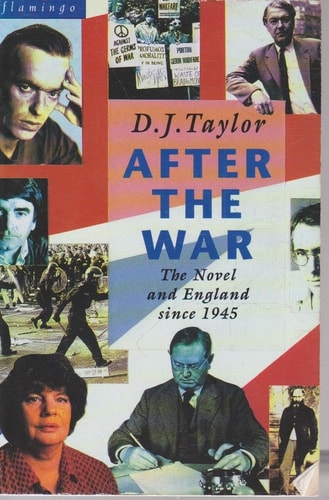
After the War: The Novel and English Society Since 1945
0
0
As an Amazon Associate and affiliate partner, Menrva Books earns from qualifying purchases. Learn more
Author Description
What has gone wrong with English novels? Why do they seem so feeble compared to the Victorian greats? Is it the fault of the writing or the fragmented modern world the writers try to capture? D.J. Taylor asks these tough, fundamental questions. Following his reading of a host of authors - Waugh and Powell, Kingsley Amis, Malcolm Bradbury, John Fowles, A.S. Byatt and many more - readers can trace, in this account of modern fiction, a particular tradition and even define the "Thatcherite" novel. It is also possible to look at history differently, from the post-war dreams to the nineties recession.
Menrva's Summary
THE THESIS
This work investigates the perceived decline in quality of the English novel since 1945 by examining the relationship between literary output and the shifting socio-political landscape of post-war Britain. D.J. Taylor, a noted critic and novelist, synthesizes decades of literary history to argue that the perceived feebleness of modern fiction is inextricably linked to the fragmentation of the society it attempts to mirror. By analyzing the works of major figures such as Evelyn Waugh, Kingsley Amis, and A.S. Byatt, Taylor constructs a framework for understanding how the post-war era, culminating in the Thatcherite period, fundamentally altered the trajectory of the English novel.
THE SCOPE MAP
What You Will Find
- A critical survey of major English novelists from 1945 through the 1990s.
- An analysis of the "Thatcherite novel" as a distinct cultural and literary phenomenon.
- A historical overview of post-war British societal shifts, including the transition from post-war optimism to the recession of the 1990s.
- A comparative study evaluating modern literary output against the standards of Victorian literature.
THE AUTHORITY PERSPECTIVE
The subject matter points to a dense, analytical text intended for students of literature and cultural historians interested in the intersection of politics and narrative form. The framing suggests a rigorous, critical examination that challenges conventional views on the evolution of the post-war English novel.
Page Count:
320
Publication Date:
1994-01-01
Publisher:
Flamingo
ISBN-10:
0006547532
ISBN-13:
9780006547532
History
Non-Fiction
Literature & Fiction
Literary Criticism
World Literature
British literature
Community Tags
Similar Books